Choosing Dog Food for Your Pit Bull
Pit Bull is a type, not a single registry breed, so no label can promise a perfect fit. We compare label data on named foods to help you read the bag.
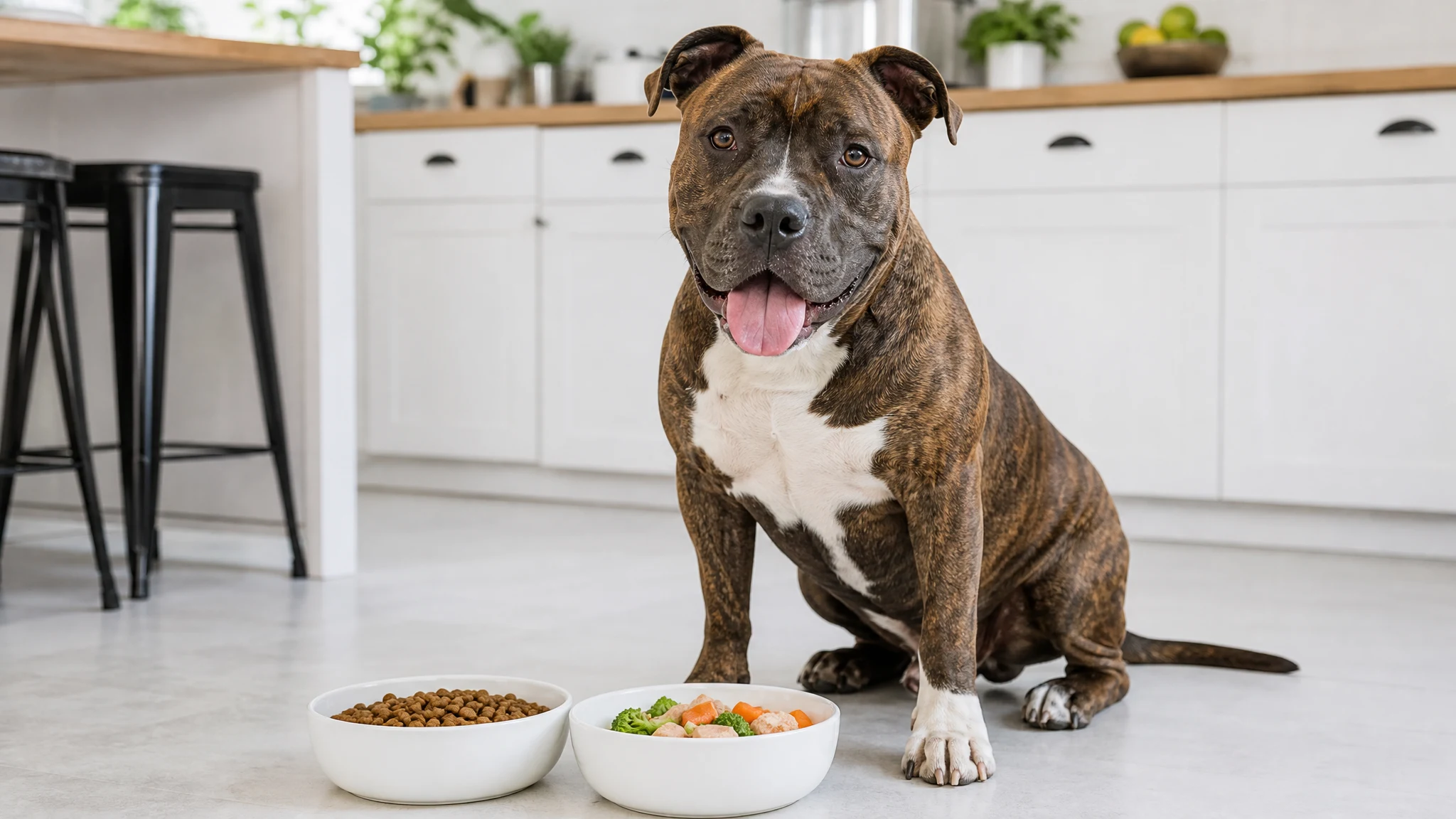
Foods for Pit Bulls, compared by label
Protein and fat as each brand publishes them: guaranteed minimums from the label (as fed), or the dry-matter averages some brands publish instead, marked as such. We compare labels; we do not run feeding trials. Your veterinarian should choose the food for a dog with a health condition.
| Food | Form | Life stage | Protein / fat | Calories |
|---|---|---|---|---|
| Royal Canin Medium Adult Dry Dog Food | dry | adult (12 months and older, 23 to 55 lb) | 23.0% / 12.0% | 340 kcal ME per cup, as fed (calculated) |
| Royal Canin Large Adult Dry Dog Food | dry | adult (over 15 months, 56 to 100 lb) | 24.0% / 15.0% | 360 kcal ME per cup, as fed (calculated) |
| Hill's Science Diet Adult Large Breed Chicken & Barley Recipe Dog Food | dry | adult (large breed 1 to 5 years, ideal weight 55 to 110 lb) | not published | 365 kcal per cup (3,675 kcal/kg) |
| Hill's Science Diet Puppy Large Breed Chicken & Brown Rice Recipe Dog Food | dry | growth (large breed puppies over 55 lb as adults, up to 18 months) | not published | 387 kcal per cup (3,591 kcal/kg) |
| Hill's Science Diet Adult Chicken & Barley Entree Dog Food | wet | adult (1 to 6 years) | not published | 369 kcal per 13 oz (370 g) can (per can, not per cup) |
| Victor Hi-Pro Plus | dry | all life stages except growth of large size dogs (70 lb or more as an adult) | 30.0% / 20.0% | 406 kcal per cup (3815 kcal/kg) |
| Victor High Energy | dry | all life stages except growth of large size dogs (70 lb or more as an adult) | 24.0% / 20.0% | 412 kcal per cup |
| Freshpet Vital Chicken Recipe with Peas, Carrots & Brown Rice | fresh | all life stages, including growth of large size dogs (70 lb or more as an adult) | 9.5% / 7.0% | unknown (page gives 1363 kcal/kg and 309 kcal per 1/2 lb, calculated; no per-cup figure) |
| Nom Nom Beef Mash | fresh | all life stages, including growth of large size dogs (70 lb or more as an adult) | 8.0% / 5.0% | 201 kcal per cup (168 g, calculated) |
| JustFoodForDogs Beef & Russet Potato Recipe | fresh | adult maintenance (not intended for growing puppies) | 8.5% / 7.0% | unknown (page gives 792 kcal ME per 18 oz pack, 44 kcal ME per oz; no per-cup figure) |
Food Guides for Pit Bulls
Each guide reads the label first: life stage, AAFCO statement, ingredients, calories and what the brand says about feeding.
Best foods
Foods compared by label data: AAFCO statement, protein, fat and calories.
- Best Food for Pit Bulls on a Budget
- Is Wellness Complete Health a Good Fit for a Pit Bull?
- Wellness Complete Health Dog Food for Pit Bulls: How It Compares on the Label
- Best Dog Food for Gut Health: What to Check on the Label for a Pit Bull
- Best Food for Dog Gut Health: A Label Comparison for Pit Bulls
Feeding
How much and how often to feed, by age and weight.
- Transitioning a Pit Bull to a New Food: A Feeding Preparation Guide
- Meal Prep for Pit Bulls: Batch-Preparing Kibble and Fresh Food
- Preparing Your Pit Bull's Meals: A Step-by-Step Feeding Routine
- Reading a Dog Food Feeding Chart: What the Numbers Actually Mean
- Dog Feeding Chart for Pit Bulls: Puppy to Senior
Nutrition and health
The diet questions that matter for this breed.
- Prebiotics vs Probiotics in Pit Bull Gut Health: What's the Difference
- Joint Supplements for Pit Bulls: What the Research Says
- Dog Health Supplements for Pit Bulls: Which Ones Have Evidence Behind Them
- Signs a Pit Bull's Gut Health Needs Attention From a Vet
- Fiber and Gut Health in Pit Bulls: What the Label Should Show
What matters when feeding Pit Bulls
Breed facts that change what and how much to feed, with sources.
| Adult weight | UKC: males 35 to 60 lb, females 30 to 50 lb. Hill's profile: 30 to 60 lb (males heavier) source |
| Size | medium source |
| Life expectancy | 12 to 14 years source |
| Switch to adult food | About 12 months (general guidance for medium-sized breeds; no pit bull specific age found) source |
| Diet-related health topics | condition: hip and elbow dysplasia; source url: https://www.hillspet.com/dog-care/dog-breeds/american-pit-bull-terrier; source name: Hill's Pet Nutrition, American Pit Bull Terrier breed page; retrieved: 2026-10-26; quote: Hip and elbow dysplasia due to genetic and environmental causes can affect athletic breeds. |… source |
How we compare foods
We read each food's published label: the AAFCO nutritional adequacy statement, the guaranteed analysis, the calorie statement and the ingredient list, from the brand's own page. We note which life stage each food is formulated for and whether it covers large-breed growth. We do not test foods on dogs, accept payment from brands or earn commission on these foods. More on our method.
Pit Bull Food Questions, Answered
How much does a Pit Bull weigh, and does that change which food fits?
The United Kennel Club standard lists males at 35 to 60 lb and females at 30 to 50 lb, which is medium size. Hill's gives 30 to 60 lb. That range spans Royal Canin's Medium Adult (23 to 55 lb) and Large Adult (56 to 100 lb) label bands, so check each bag's weight range and ask your veterinarian.
Does a Pit Bull need large-breed puppy food?
Probably not by the numbers. Whole Dog Journal notes AAFCO's large-size cutoff is 70 lb as an adult, and the UKC range tops out at 60 lb. Some nutritionists use 50 lb, so a very big dog may be near the line. Your veterinarian should confirm.
What does the AAFCO statement on the bag tell me?
It says which life stage the food is formulated for. Victor Hi-Pro Plus, for example, states all life stages except growth of large size dogs (70 lb or more as an adult). Freshpet Vital Chicken states all life stages including large-size growth. It is a label claim about life stage, not a quality ranking.
Can food help with hip dysplasia or skin allergies?
Hill's breed page lists hip and elbow dysplasia, skin allergies and weight management as diet-relevant concerns for the breed. Shelf food is not a treatment for any of them. Only a veterinarian can say whether your dog needs a change, and prescription diets come only from a veterinarian.
How did you compare these foods, and what about feeding amounts?
We compared label data only: AAFCO statements, first ingredients, guaranteed analysis and calories. We ran no feeding trials or taste tests. Treat each brand's feeding chart as a starting point, and adjust with your veterinarian. Kibble size is not listed on several brand pages, so check the brand.
General nutrition information compiled from product labels and published sources, not veterinary advice. Your veterinarian is the right person to choose a diet for your dog, especially one with a health condition.