Prebiotics vs Probiotics in Pit Bull Gut Health: What's the Difference
General nutrition information compiled from product labels and published sources, not veterinary advice. Your veterinarian is the right person to choose a diet for your dog, especially one with a health condition.
Pit Bull owners see "prebiotic" and "probiotic" on bags, cans and treat packs, often in the same sentence. The words sound alike, but they mean different things. This guide shows you how to tell them apart and how to read a label for them.
It will not name a single winner. Nothing in the label data we compared says a food is made for Pit Bulls, so the aim is a method you can reuse. Whether you are looking for the best dog food for gut health or just trying to understand a label, the steps are the same.
The short version
- Prebiotics are food components, mostly certain fibers, that gut bacteria can use as fuel.
- Probiotics are live microorganisms added to a product.
In plain terms, a prebiotic feeds the bacteria already in the gut. A probiotic adds bacteria. A label can have one, both or neither.
Neither word is a promise of results. A food with either is not a treatment for any condition. If your dog has ongoing digestive trouble, a veterinarian decides what to do.
Why this matters for a Pit Bull
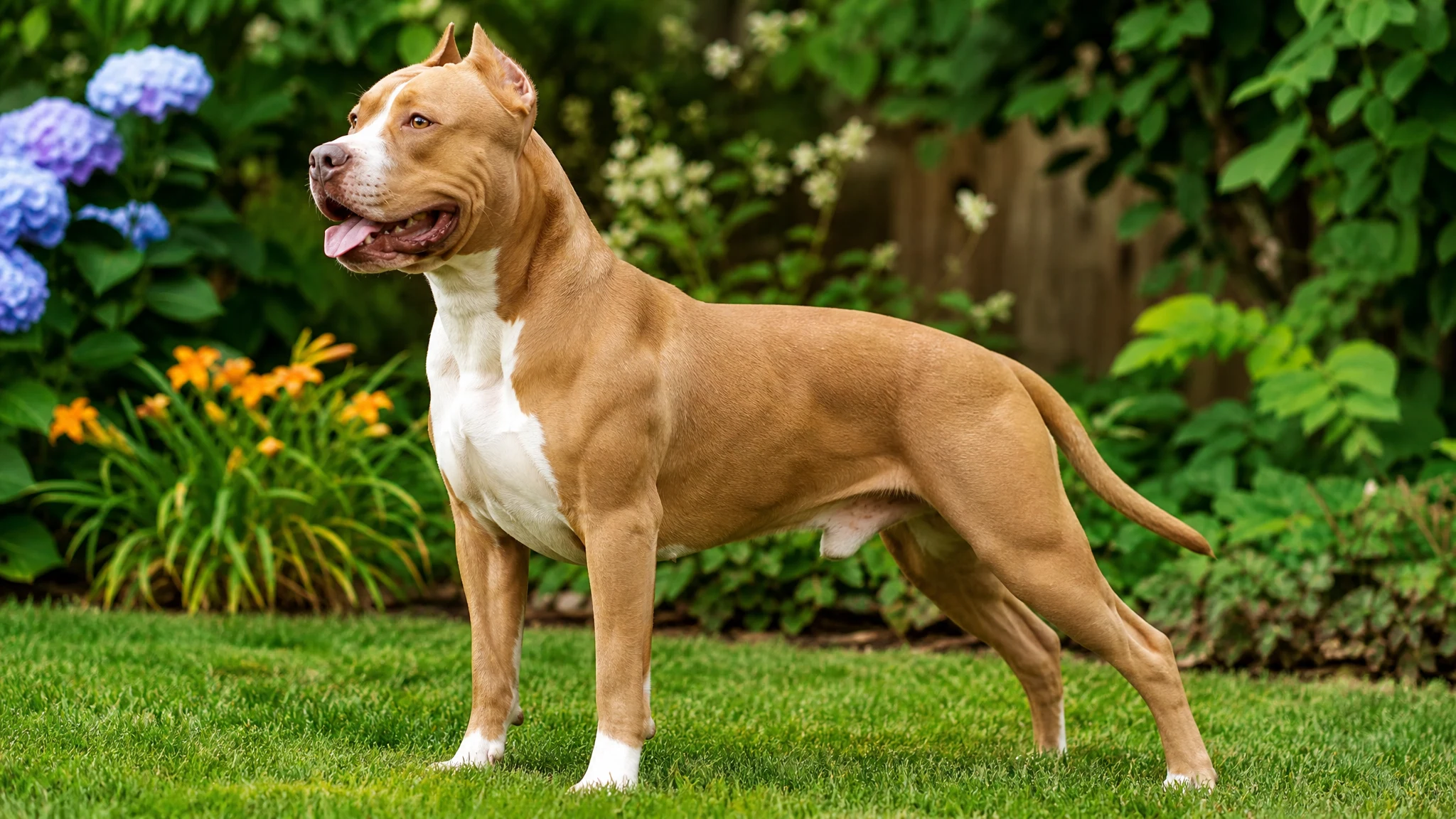
The United Kennel Club lists the American Pit Bull Terrier as a medium breed. Males are 35 to 60 lb and females 30 to 50 lb. "Pit Bull" is a type of dog rather than one registry breed, so size and build vary a lot from dog to dog.
Hill's Pet Nutrition's breed page lists hip and elbow dysplasia, skin allergies and weight management as diet-relevant topics for the breed. It gives a life expectancy of 12 to 14 years. None of this makes a prebiotic or probiotic a fix for any of those topics. It does mean diet is worth a careful look. For the bigger picture, see the diet factors that matter for Pit Bulls.
Materials you need
- The bag, can or pack of the food you are considering, or its brand page.
- Your dog's current food label, for comparison.
- Your dog's age and a recent weight from your veterinarian.
- A pen and paper, or a notes app.
- A list of questions for your veterinarian.
Step-by-step: how to check a food for prebiotics and probiotics
Step 1: Confirm the life stage first
Gut ingredients matter less than whether the food suits your dog's age. Find the AAFCO statement on the label. It says if the food is for maintenance, growth or all life stages.
Royal Canin UK gives about 12 months as general guidance for switching medium-sized breeds to adult food. It notes that no Pit Bull specific age was found. Ask your veterinarian when to switch your own dog.
Watch the large-breed wording too. AAFCO requires growth and all-life-stages foods to say whether they include growth of large dogs, meaning 70 lb or more as an adult. Dog Food Advisor, quoting AAFCO label language, reports a calcium maximum of 1.8% on a dry matter basis for large-breed growth foods, versus 2.5% for other foods. Most Pit Bulls are below the 70 lb cutoff, but Whole Dog Journal notes that some nutritionists use 50 lb, so a very big dog may sit near the line. A veterinarian should confirm for puppies.
Step 2: Read the ingredient list for prebiotic-type fibers
Prebiotic ingredients, when a brand includes them, usually appear as named fibers. A label may also call out a prebiotic blend. Many ordinary ingredients, such as grains and vegetables, add fiber without being sold as prebiotics.
Look at the crude fiber figure in the guaranteed analysis. Brands report it differently. Royal Canin Medium Adult lists a 3.4% maximum. Victor Hi-Pro Plus lists 3.8% maximum. Hill's Science Diet Adult Large Breed gives 1.7% as a dry matter average, which is not a maximum. These numbers do not tell you which food is better for the gut. They only show that you need to compare the same kind of figure.
Step 3: Look for live microorganisms by name
A probiotic claim should name the organisms and, ideally, say the amount that is guaranteed. A vague phrase like "gut support" tells you very little.
The label data we compared for the products below did not list added probiotics. That covers Royal Canin, Hill's Science Diet, Victor, Freshpet, Nom Nom and JustFoodForDogs. A recipe could still change. Check the current label or ask the brand directly.
Step 4: Check the first five ingredients
Ingredient order shows what the food is mostly made of. Here is a sample of what the first five ingredients look like in different types of food:
| Food | Form | First ingredients on the label |
|---|---|---|
| Royal Canin Medium Adult | Dry | Brewers rice, chicken by-product meal, oat groats, wheat, corn protein meal |
| Hill's Science Diet Adult Large Breed Chicken & Barley | Dry | Chicken, cracked pearled barley, brown rice, brewers rice, whole grain wheat |
| Victor High Energy | Dry | Beef meal, grain sorghum, whole grain millet, chicken fat, chicken meal |
| Freshpet Vital Chicken Recipe | Fresh | Chicken, chicken liver, peas, carrots, chicken broth |
| Nom Nom Beef Mash | Fresh | Ground beef, russet potatoes, eggs, carrots, peas |
Fresh foods have far lower protein and fat percentages than dry food, since they contain more water. Compare them on a dry matter basis, or the numbers will mislead you. Calories also differ widely. Royal Canin Medium Adult is 340 kcal per cup, Victor High Energy is 412 kcal per cup, and Nom Nom Beef Mash is 201 kcal per cup. Brand pages are the place to confirm current data.
Step 5: Check portions as a starting point
The feeding guide on a label is a starting point, not a rule. Hill's says to adjust amounts to maintain optimal weight. Royal Canin says its guide is only a guide, and that grams are more accurate than cups. For example, the Hill's chart lists 3 1/4 cups per day for a 50 lb dog on its Adult Large Breed dry food, but your dog may need more or less.
Keep weight management in mind. Hill's lists it as a diet-relevant topic for the breed, and a calorie-dense food is easy to overfeed.
Step 6: Switch foods slowly
Hill's suggests a 7 day transition on its puppy food page. Mix increasing amounts of the new food with decreasing amounts of the old. A gradual change is gentler on the gut than a sudden swap, whatever the food contains.
Step 7: Take your notes to your veterinarian
Bring the label, the AAFCO statement and your questions. Ask whether your dog needs a probiotic at all, and whether it should come from a food or a separate product. If a diet is therapeutic, only a veterinarian prescribes it.
Tips
- Compare like with like: dry to dry, fresh to fresh.
- Write down the AAFCO statement for each food. It is the one line that says "complete and balanced" and for which life stage.
- Change one thing at a time. If you swap food and add a supplement together, you will not know which did what.
- Keep a short log of stool quality, appetite and energy to share with your veterinarian.
- Ask the brand about kibble size or other missing details. The pages we compared did not list kibble size.
Common mistakes to avoid
- Treating "prebiotic" and "probiotic" as the same thing. They are not interchangeable.
- Assuming a Pit Bull formula exists. The label data we compared showed no food made specifically for Pit Bulls. Size-based lines, such as Royal Canin Medium Adult (23 to 55 lb), are the closest fit.
- Choosing a large-breed food by default. Hill's Adult Large Breed is for dogs with an ideal weight of 55 to 110 lb. Many Pit Bulls are lighter.
- Feeding a large-breed puppy food to an adult. Hill's says its large breed puppy food is not recommended for adult dogs.
- Using a food to treat a problem. Foods do not cure diarrhea, allergies or any other condition. A veterinarian should see a dog with ongoing symptoms.
- Adding supplements on your own. Ask your veterinarian before giving one, and follow their guidance on amounts.
Expected results
Results vary, and a food may or may not change anything you can see. Some owners find that a slow switch to a food with suitable fiber goes more smoothly. Prebiotic fibers and probiotics are sometimes described as supporting a balanced gut, but a label cannot promise how your dog will respond.
Give any change several weeks, watch stool quality and weight, and report problems to your veterinarian. If symptoms get worse or do not settle, stop adding things and call the clinic.
How we compared foods
We compared label data from each brand's own page: AAFCO statements, ingredients, guaranteed analysis, calories and feeding guides. We did not run feeding trials or taste tests, and we did not score foods. Where a page left out a number, we say so and suggest you contact the brand.
Bottom line
A prebiotic feeds gut bacteria and a probiotic adds live ones. For a Pit Bull, the best dog food for gut health is one that matches your dog's life stage and weight, has a label you understand and is introduced slowly. Your veterinarian makes the final call for your individual dog.
Sources
- United Kennel Club, American Pit Bull Terrier breed standard
- Hill's Pet Nutrition, American Pit Bull Terrier breed page
- Royal Canin UK, when to switch your puppy to an adult diet
- Whole Dog Journal, best large breed puppy food
- Dog Food Advisor, large-breed puppy food and all-life-stages labels
- Royal Canin, Medium Adult
- Hill's Science Diet, Adult Large Breed
- Hill's Science Diet, Puppy Large Breed
- Victor, High Energy
- Victor, Hi-Pro Plus
- Freshpet, Vital Chicken Recipe
- Nom Nom, Beef Mash