Pit Bull Nutrition: The Diet Factors That Matter for This Breed
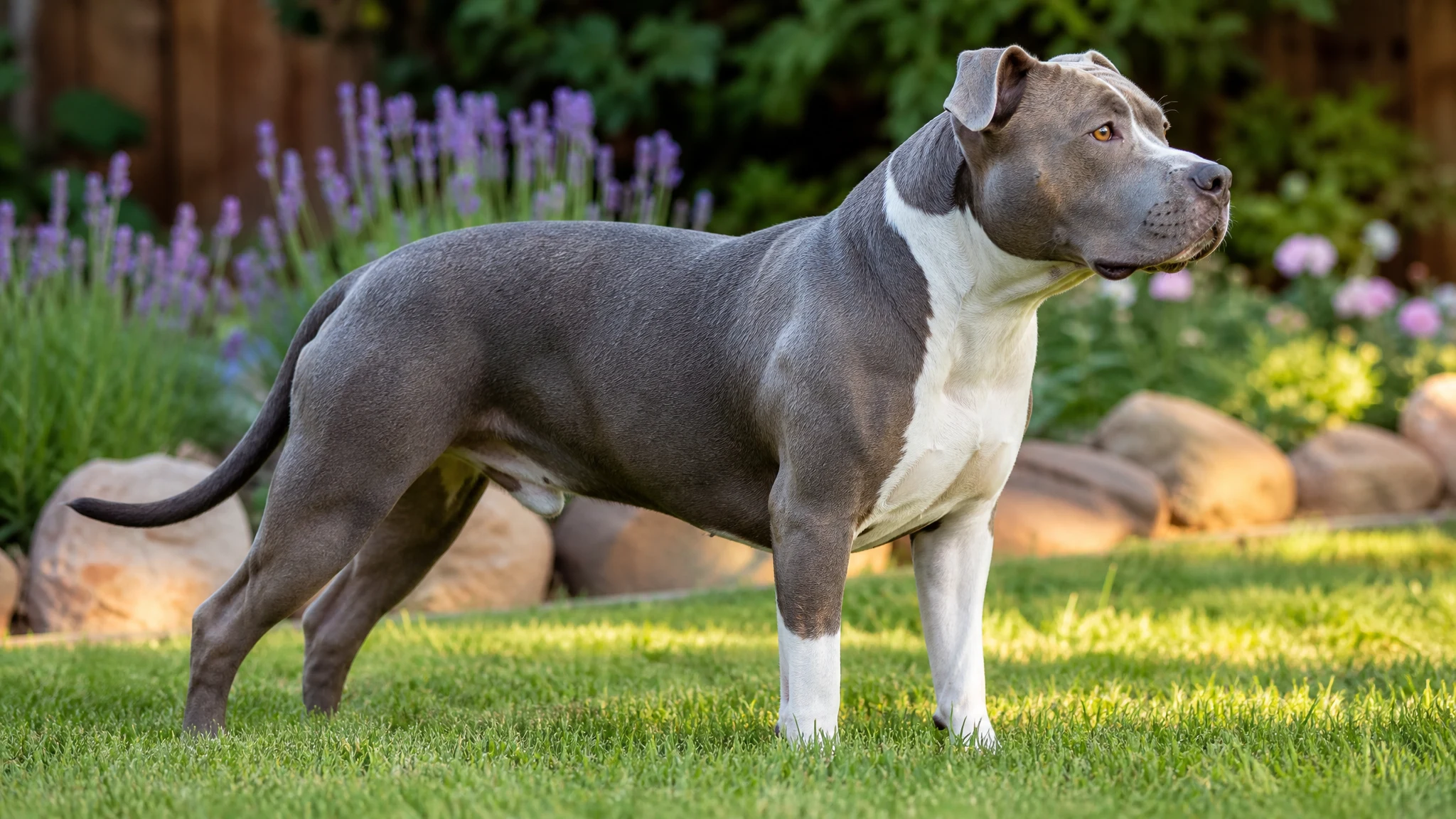
General nutrition information compiled from product labels and published sources, not veterinary advice. Your veterinarian is the right person to choose a diet for your dog, especially one with a health condition.
Good Pit Bull nutrition starts with a few plain questions. How old is the dog? How big? How active? What does the label actually say? Marketing claims come after those answers, if at all.
This guide walks through the choices behind a sensible Pit Bull diet, one step at a time. It does not name a single best food. It shows how to read the evidence yourself. For a side-by-side look at specific products, see our foods compared by label data.
One note on method. We compared published label data. We did not run feeding trials or taste tests, and nothing here is a verdict on how a food performs in a real dog.
What You Need Before You Start
- Your dog's current weight, from a scale at home or at your veterinarian's office.
- Your dog's age, as exactly as you know it.
- A kitchen scale or a standard measuring cup. Grams are more accurate than cups.
- The bag or can of any food you are considering, so you can read the whole label, not just the front.
- A notebook or phone note for weights, portions and treats.
- Your veterinarian's contact details, because several steps below end with "ask your vet."
Step 1: Know What "Pit Bull" Means for Your Dog
The United Kennel Club (UKC) recognizes the American Pit Bull Terrier as a breed. "Pit Bull" is a type that covers more than one registry breed, and many family dogs are mixes. Your dog may be smaller or larger than the breed standard.
The UKC breed standard lists adult males at 35 to 60 lb and females at 30 to 50 lb. It describes the breed as medium in size. Hill's Pet Nutrition gives a slightly different range on its American Pit Bull Terrier breed page: 30 to 60 lb, with males heavier. Hill's also gives a life expectancy of 12 to 14 years.
Why this matters for food: a medium dog is not a large-breed dog. That affects which life-stage labels apply, as Step 3 explains. If your dog is a mix, treat the breed numbers as rough guides and let your veterinarian's weight assessment lead.
Step 2: Check the Life Stage on the Label
Dog foods in the United States carry an AAFCO statement. It says whether the food is complete and balanced for growth, for adult maintenance, or for all life stages. It is usually found in small print near the ingredient list.
The wording differs by food. Here are three real examples from brand pages:
- Royal Canin Medium Adult says it is formulated to meet AAFCO nutrient levels for maintenance. The brand lists it for adults 12 months and older, 23 to 55 lb.
- Victor Hi-Pro Plus says it meets AAFCO levels for all life stages, except for growth of large size dogs (70 lb or more as an adult).
- Freshpet Vital Chicken Recipe says it meets AAFCO levels for all life stages, including growth of large size dogs.
An adult-only food is not meant for a growing puppy. An all-life-stages food can be used for either, but read the large-dog exception. If you are unsure which statement fits your dog, ask your veterinarian.
Step 3: Match the Food to Puppy, Adult or Senior Needs
Puppies need food made for growth. Royal Canin UK offers general guidance that medium breeds move to adult food at about 12 months. It did not give a Pit Bull specific age, so your veterinarian should confirm the timing for your dog.
The large-breed puppy question comes up often. AAFCO requires growth and all-life-stages foods to state whether they cover growth of large dogs, meaning dogs that reach 70 lb or more as adults. Whole Dog Journal and Dog Food Advisor, both secondary sources quoting AAFCO label language, say large-breed growth foods carry a stricter calcium maximum of 1.8% on a dry matter basis, versus 2.5% for other foods.
A typical Pit Bull falls below that 70 lb line, so the large-breed puppy rule generally does not apply. Whole Dog Journal notes that some nutritionists use 50 lb as a cutoff, so a very big individual may sit near it. If your puppy looks like it will be a large one, ask your veterinarian before you choose.
Some products are explicit about this. Hill's Science Diet Puppy Large Breed is aimed at puppies expected to top 55 lb as adults and is not recommended for adult dogs. Hill's Science Diet Adult Large Breed is described for dogs with an ideal weight of 55 to 110 lb. Read those ranges against your own dog's expected size rather than assuming a "large breed" label fits every Pit Bull.
Step 4: Understand the Diet Factors Hill's Links to the Breed
Hill's Pet Nutrition's American Pit Bull Terrier breed page mentions three health topics that touch on diet. This step takes them one at a time. None of them is a reason to buy a particular food, and no food has been shown here to prevent or treat any of them.
Hip and elbow dysplasia
Hill's lists hip and elbow dysplasia among the concerns for the breed. These are joint conditions diagnosed and managed by a veterinarian. We did not find a source in our research that says a specific over-the-counter food changes the course of them.
What you can do with food is simple. Feed a diet that matches the life stage, and keep your dog lean, since body weight is something you control. Ask your veterinarian what they recommend for your dog's joints. Do not add supplements on your own.
Skin allergies, itchy skin and ear infections
Hill's also lists skin allergies, including itchy skin and ear infections. Itchy skin has many possible causes, and food is only one of them. A veterinarian has to work out which applies.
If your veterinarian suspects a food reaction, they may suggest an elimination diet or a prescription food. Prescription diets are something only a veterinarian prescribes, so do not switch to one yourself. Changing foods repeatedly while guessing makes it harder to learn anything.
Weight management, healthy weight and lean muscle
Hill's lists healthy weight and lean muscle as a focus for the breed. This is the diet factor you can act on most directly, and Steps 5 and 6 cover it.
Step 5: Compare Calorie Density, Not Just Protein
Calories per cup vary a lot between foods. Two bowls that look the same size can hold very different amounts of energy. Compare these label figures:
| Food (brand page data) | Form | Calories listed |
|---|---|---|
| Royal Canin Medium Adult | Dry | 340 kcal ME per cup (calculated) |
| Royal Canin Large Adult | Dry | 360 kcal ME per cup (calculated) |
| Hill's Science Diet Adult Large Breed | Dry | 365 kcal per cup |
| Victor Hi-Pro Plus | Dry | 406 kcal per cup |
| Victor High Energy | Dry | 412 kcal per cup |
| Nom Nom Beef Mash | Fresh | 201 kcal per cup (calculated) |
Do not compare dry and fresh foods by cup alone. Water content differs, and fresh foods are often fed by weight. Some brands give no per-cup figure at all. Freshpet and JustFoodForDogs publish calories per weight, so check the brand page.
Also watch the difference between a guaranteed minimum and an average. Victor Hi-Pro Plus lists a 30% protein minimum and 20% fat minimum. The Hill's pages we reviewed give dry matter averages, not guaranteed minimums, so those numbers are not directly comparable. A higher protein or fat number is not automatically better. A calorie-dense food simply means smaller portions for the same energy.
Step 6: Start From the Label's Feeding Guide, Then Adjust
Every feeding chart is a starting point. Brands say so themselves. Royal Canin notes that its guide is only a guide, and that grams are the most accurate measure. Hill's says to adjust amounts to maintain optimal weight.
Some examples of what charts say:
- Royal Canin Large Adult lists about 3 3/8 cups (318 g) a day for a 57 lb dog at moderate activity.
- Hill's Science Diet Adult Large Breed lists 3 1/4 cups a day for a 50 lb dog.
Those are large-breed formulas, and both charts assume a particular dog. Your Pit Bull may need more or less. Use your dog's own weight, find that row on the chart, and treat it as day one's portion.
Then check your dog every two weeks. Run your hands along the ribs. You should be able to feel them under a thin layer of covering. Look from above for a waist. If you are unsure what a healthy body condition looks like on your dog, ask your veterinarian to show you. Adjust the portion in small steps, and write down what you change.
Step 7: Choose a Form That Fits Your Household
Dry, wet and fresh foods can all carry a complete and balanced statement. Read each one. The practical differences are cost, storage and convenience.
- Dry: easy to store and measure. Check calories per cup, since they run higher than in fresh food.
- Wet: Hill's lists its canned Adult Chicken & Barley Entree with calories per 13 oz can, not per cup. Hill's also says it is not for puppies.
- Fresh: JustFoodForDogs Beef & Russet Potato is labeled for adult maintenance, not for growing puppies. Nom Nom and Freshpet list all-life-stages statements that include large-dog growth. Fresh foods need refrigeration or freezing. JustFoodForDogs says thawed sealed meals are used within 7 days, and 5 days once opened.
Check each brand's own page for current ingredients and details, since formulas change. We do not list prices because we cannot confirm them.
Step 8: Switch Foods Slowly
Hill's recommends transitioning over 7 days, mixing increasing amounts of the new food with decreasing amounts of the old. That is a reasonable pattern for any change.
- Days 1 and 2: mostly old food with a small share of new.
- Days 3 to 5: gradually raise the new share.
- Days 6 and 7: mostly new, finishing at all new.
If your dog has repeated vomiting, diarrhea or refuses food, stop and call your veterinarian rather than pushing through.
Tips for Reading Labels Skeptically
- Ingredient lists are in order by weight before cooking. Ingredients that hold water, like fresh chicken, weigh more than they will in the finished food. Meals are concentrated.
- "Grain free" is a marketing term, not a health claim. Among the foods we looked at, most are not grain free. JustFoodForDogs Beef & Russet Potato is labeled grain free, and the Nom Nom page does not claim it either way.
- Front-of-bag words like "athletic," "power" or "for strong breeds" are not nutrient standards. We found no food whose brand page offers a Pit Bull specific formula.
- Kibble size is not published on most brand pages we reviewed. If your dog gulps food, ask the brand directly.
- Count treats. They add calories, and chews and table scraps add up quickly.
Common Mistakes to Avoid
- Feeding by the cup without checking calories. A switch from a 340 kcal cup to a 412 kcal cup is a meaningful change in daily energy.
- Using a puppy food for too long. Growth foods are made for growth. Ask your veterinarian when to move on.
- Treating a large-breed formula as a Pit Bull formula. Check the weight range on the label against your dog's size.
- Adding supplements without advice. Skip doses and powders unless your veterinarian recommends them.
- Chasing itchy skin with constant food changes. Get a diagnosis first.
- Assuming a high-protein food is better for every dog. Fit matters more than the headline number.
What Results to Expect
Results vary by dog, and a food is only one piece. A well-matched diet, measured portions and regular weigh-ins may help support a steady body weight and healthy body condition. A complete and balanced food may also help your dog get the nutrients the AAFCO profiles call for.
Do not expect a food to fix a medical problem. Joint disease, skin trouble and weight changes all need a veterinarian. If your dog's weight, appetite, stool or skin changes, book a visit rather than switching foods again.
Where to Go Next
Once you know your dog's life stage, size and target weight, you can narrow the field. Our comparison of foods by label data sets the published numbers side by side. Treat it as a way to read labels, not a ranking.
What to feed a Pit Bull comes down to a food that fits the life stage, calories you can measure and a body condition you check often. Your veterinarian makes the final call for your individual dog.
Sources
- United Kennel Club, American Pit Bull Terrier breed standard
- Hill's Pet Nutrition, American Pit Bull Terrier breed page
- Royal Canin UK, when to switch your puppy to an adult diet
- Whole Dog Journal, best large breed puppy food
- Dog Food Advisor, large breed puppy food and all life stages labels
- Royal Canin, Medium Adult
- Royal Canin, Large Adult
- Hill's Science Diet, Adult Large Breed
- Hill's Science Diet, Puppy Large Breed
- Hill's Science Diet, Adult Chicken & Barley Entree
- Victor, Hi-Pro Plus
- Victor, High Energy
- Freshpet, Vital Chicken Recipe
- Nom Nom, Beef Mash
- JustFoodForDogs, Beef & Russet Potato Recipe