Signs a Pit Bull's Gut Health Needs Attention From a Vet
General nutrition information compiled from product labels and published sources, not veterinary advice. Your veterinarian is the right person to choose a diet for your dog, especially one with a health condition.
Most Pit Bulls have a reputation for eating anything, which makes it hard to tell a normal upset stomach from a real problem. This guide shows you how to watch your dog, record what you see, and bring useful notes to a veterinarian.
It will not tell you what is wrong with your dog. Only a veterinarian can do that. It also will not name the best food for dog gut health, because that answer depends on the individual dog.
Why a Pit Bull's size and build matter here
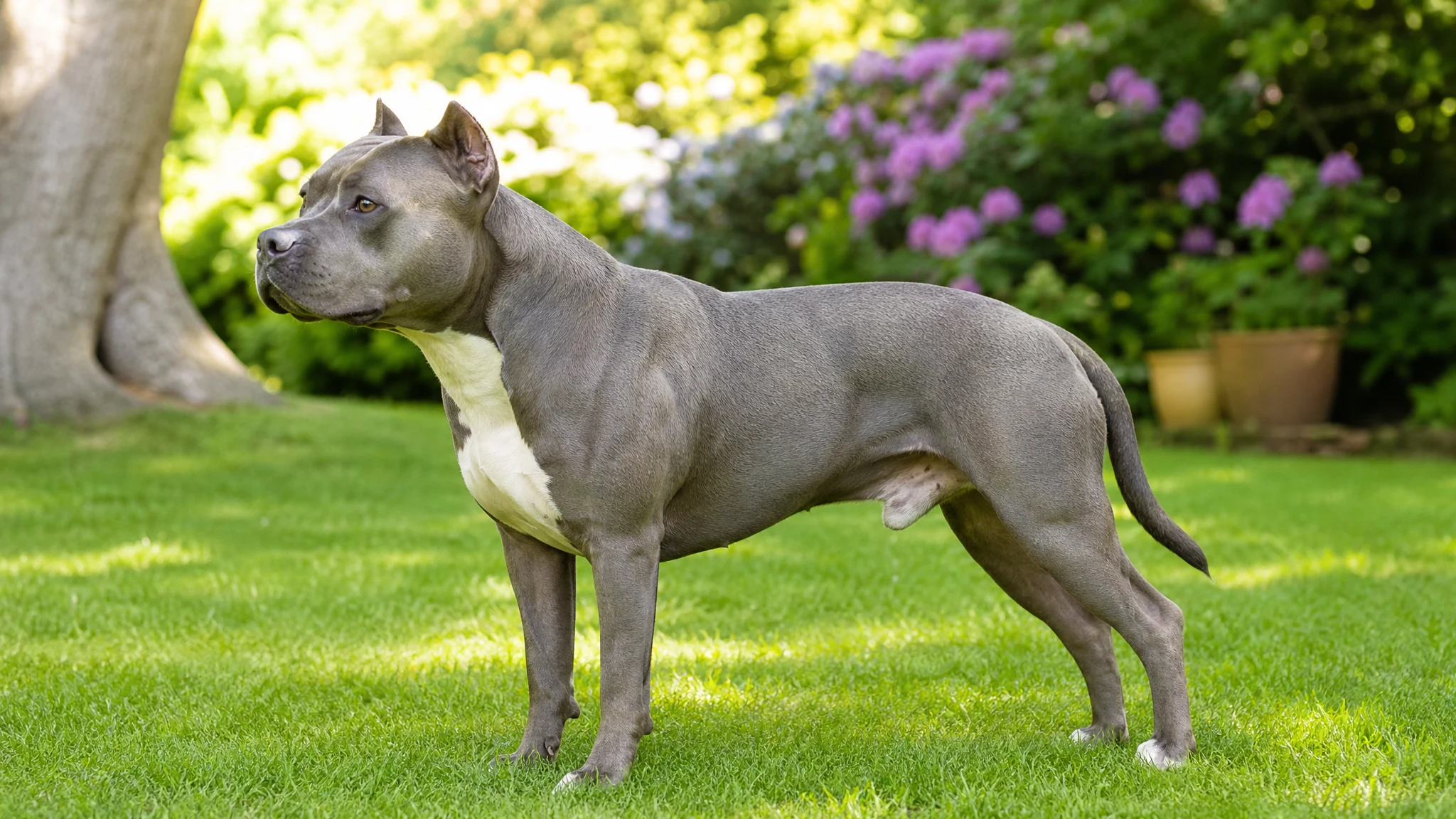
The United Kennel Club describes the American Pit Bull Terrier as a medium-sized dog. Its breed standard lists males at 35 to 60 lb and females at 30 to 50 lb. Note that "Pit Bull" is a type, and the UKC registers the American Pit Bull Terrier as the breed.
A medium dog with a muscular build can lose weight or dehydrate quickly if it is sick, so changes are worth noting early. Hill's Pet Nutrition lists weight management, skin allergies (itchy skin and ear infections) and hip and elbow dysplasia as diet-relevant health topics for the breed. Hill's gives a life expectancy of 12 to 14 years.
Skin trouble and stomach trouble can show up together in some dogs. If your Pit Bull has both, tell your veterinarian about both.
What you need
- A notebook or phone notes app for a daily log
- The food bag or can, or a photo of the full label (brand, product name, ingredient list, AAFCO statement)
- A list of every treat, chew, table scrap and supplement your dog gets
- A kitchen or pet scale to record your dog's weight, if you have one
- Your veterinarian's phone number and an emergency clinic's number
- Photos or short videos of anything unusual, such as vomit or stool
Step 1: Learn your dog's normal
Before you can spot a change, you need a baseline. For one week, write down when your dog eats, how much, and how eagerly. Note stool timing, firmness and color, and your dog's usual energy.
Record the weight too. A slow drop or climb is easy to miss by eye, and it is exactly the sort of detail a veterinarian can use.
Step 2: Watch for the signs
Gut trouble does not always look like vomiting. Keep an eye out for these changes:
- Repeated vomiting, or vomiting that comes back day after day
- Loose or watery stool that lasts, or stool that keeps changing in form
- Blood or mucus in stool, or black, tar-like stool
- Straining, or trips outside with little result
- Loss of appetite, or sudden pickiness in a dog that usually eats well
- Unplanned weight loss, or weight that keeps falling despite normal meals
- A swollen or tight belly, or a dog that seems uncomfortable when touched there
- Excess gas, gurgling or lip licking that is new for your dog
- Lethargy, hiding, or reluctance to play
- Itchy skin or repeat ear infections alongside any of the above
One mild, short episode may pass. A pattern, or any sign that comes with weakness, is a reason to call.
Step 3: Decide how urgent it is
Call your veterinarian or an emergency clinic right away if your dog shows any of these:
- A hard, swollen belly with unproductive retching
- Vomiting or diarrhea with blood
- Repeated vomiting that keeps your dog from holding down water
- Collapse, pale gums or extreme weakness
- A known or suspected swallowed toy, bone, corn cob or sock
- Possible exposure to a toxin
For milder but ongoing changes, book a visit within a few days rather than waiting for them to fade. If you are unsure which group your dog is in, phone and describe what you see. Do not give human medicine unless a veterinarian tells you to.
Step 4: Keep a simple symptom and food log
For each day, write down the following:
- Meals: what, how much, what time
- Anything extra: treats, chews, scraps, new toppers
- Stool: number of trips, firmness, color, anything unusual
- Vomiting: time, amount, what it looked like
- Energy, thirst and appetite on a simple scale you choose
Photos help more than descriptions. A veterinarian can often learn more from a clear picture than from "it was loose."
Step 5: Read the food label before the visit
Write down or photograph the full label. A veterinarian will want to know the exact product, not just the brand.
Check the AAFCO statement. It tells you whether the food is formulated for maintenance, growth, or all life stages. For example, the Royal Canin Medium Adult label says it is formulated to meet AAFCO Dog Food Nutrient Profiles for maintenance, and Royal Canin lists it for dogs 12 months and older, 23 to 55 lb. Royal Canin UK gives about 12 months as a general switch point to adult food for medium breeds. Check with your veterinarian for your own dog.
Also note the first five ingredients, the guaranteed analysis and the calories per cup. Labels differ a great deal. Among the products we compared, the Victor Hi-Pro Plus label lists a minimum of 30% protein and 20% fat at 406 kcal per cup. The Royal Canin Medium Adult label lists a minimum of 23% protein and 12% fat at 340 kcal per cup. Neither number says one is better for a gut. It is simply information your veterinarian can weigh against your dog's history.
A note on method: we compared label data from brand pages. We did not run feeding trials or taste tests, and we cannot say how any food will sit with your dog.
Step 6: Raise the diet question with your veterinarian
Bring your log and label photos, then ask direct questions:
- Could the current food, a treat or a recent change be involved?
- Does my dog's fat or protein level matter for this problem?
- Is a test, a trial diet or a prescription diet appropriate?
- How long should I wait before judging a change?
Prescription diets are something only a veterinarian prescribes. Do not switch to one on your own. Likewise, no food is proven to prevent or treat a gut condition on its own, so a veterinarian decides what, if anything, to change. For a wider look at the diet factors that matter for the breed, see our guide to Pit Bull nutrition and the diet factors that matter.
On puppy foods: AAFCO requires growth and all-life-stages foods to state whether they cover growth of large dogs, meaning 70 lb or more as an adult. Dog Food Advisor, quoting AAFCO label language, notes that large-breed growth foods carry a stricter calcium maximum of 1.8% on a dry matter basis. Pit Bulls generally fall below that 70 lb line, so the large-breed puppy rule usually does not apply. Whole Dog Journal notes that some nutritionists use 50 lb as a cutoff, so a very big individual may sit near it. Your veterinarian can confirm.
Step 7: Change food only with a plan
If your veterinarian agrees a switch makes sense, do it slowly. The Hill's Science Diet puppy page, for one, advises moving over 7 days by mixing increasing amounts of the new food with decreasing amounts of the old. Other brands may suggest different timing, so follow your veterinarian's advice.
Use the feeding chart as a starting point only. Hill's, for instance, says to adjust amounts to keep your dog at an optimal weight, and Nom Nom calls its daily amounts "only a guide." Change one thing at a time so you can tell what made a difference.
Tips
- Take a fresh stool sample to the visit if your veterinarian asks for one.
- Weigh your dog every couple of weeks, and use the same scale each time.
- Keep treats and chews to a short, written list.
- Store food as the brand directs. For instance, JustFoodForDogs says thawed sealed meals should be used within 7 days, and within 5 days once opened.
- Keep every symptom note, even if the problem seems to pass. Patterns show up over weeks.
Common mistakes
- Waiting too long. A dog that hides discomfort can look fine until it is quite ill.
- Switching foods abruptly. A sudden change makes it harder to tell what caused what.
- Adding supplements or probiotics on your own. Ask your veterinarian first, and never guess at amounts.
- Chasing marketing words. Terms like "sensitive" or "gut friendly" are not the same as a veterinary diagnosis. Read the AAFCO statement and ingredient list instead.
- Assuming grain-free is safer. The grain-containing and grain-free foods on the labels we compared are not ranked by gut outcomes, so this is a question for your veterinarian.
- Blaming food every time. Swallowed objects, parasites, stress and illness can also upset a gut.
What to expect
A clear log and label photos may help your veterinarian narrow down possible causes faster. Some dogs improve after a vet-guided diet change, but results vary and nothing here promises a particular outcome. If a first plan does not help, your veterinarian may suggest more tests or a different approach.
Over time, steady records may also help you notice early which foods or treats your dog tolerates well. That kind of record is the most useful route to finding the best food for dog gut health for your own Pit Bull, and your veterinarian should guide the final choice.
Sources
- United Kennel Club, American Pit Bull Terrier breed standard
- Hill's Pet Nutrition, American Pit Bull Terrier breed page
- Royal Canin UK, when to switch your puppy to an adult diet
- Royal Canin, Medium Adult Dry Dog Food
- Victor, Hi-Pro Plus
- Hill's Science Diet, Puppy Large Breed Chicken & Brown Rice Recipe
- Nom Nom, Beef Mash
- JustFoodForDogs, Beef & Russet Potato Recipe
- Dog Food Advisor, large breed puppy food and all life stages labels
- Whole Dog Journal, best large breed puppy food