Preparing Your Pit Bull's Meals: A Step-by-Step Feeding Routine
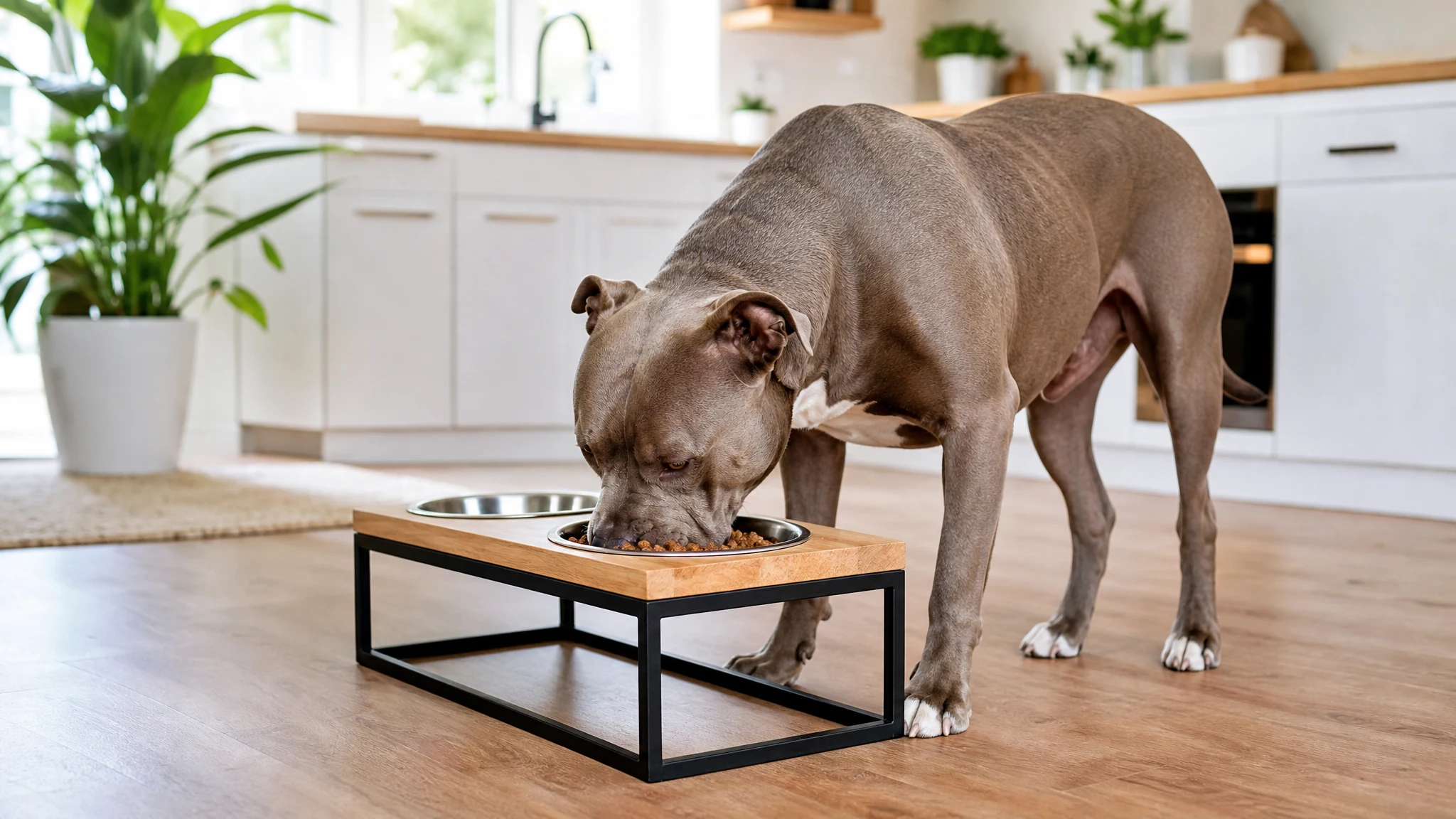
General nutrition information compiled from product labels and published sources, not veterinary advice. Your veterinarian is the right person to choose a diet for your dog, especially one with a health condition.
A good meal routine is mostly boring, and that is the point. The same measured amount, at the same times, in a clean bowl. This guide walks through dog feeding preparation for a Pit Bull, from checking the label to cleaning up afterward.
One note on method. We compared label data published by the brands named here. We did not run feeding trials or taste tests, so nothing below is a ranking or a promise about how a dog will do on a food.
Know your dog before you measure
"Pit Bull" is a type of dog, not one registry breed. The United Kennel Club lists the American Pit Bull Terrier as a medium-sized breed. Its breed standard gives adult weights of 35 to 60 lb for males and 30 to 50 lb for females. Hill's Pet Nutrition gives a similar range of 30 to 60 lb, with males heavier.
That spread is wide. A 32 lb female and a 58 lb male need very different amounts, so your own dog's weight, age and activity level drive the routine, not the breed average.
Materials you will need
- The food, with the bag, can or pack label kept in view
- A kitchen scale that reads in grams (most accurate), or a dry measuring cup
- A level scoop or spoon for leveling
- A clean stainless steel or ceramic bowl
- An airtight container for dry food, or fridge space for fresh and opened wet food
- A notebook or phone note for portions and weigh-ins
- A bathroom scale for checking your dog's weight (weigh yourself, then yourself holding the dog)
Step-by-step feeding routine
Step 1: Read the label for the life stage
Find the AAFCO statement on the package. It tells you which life stage the food is built for. Royal Canin Medium Adult, for example, states it is formulated to meet AAFCO Dog Food Nutrient Profiles for maintenance, and the brand lists it for adult dogs 12 months and older, 23 to 55 lb.
Royal Canin UK gives about 12 months as general guidance for switching medium-sized breeds from puppy to adult food. It does not give a Pit Bull specific age, so ask your veterinarian when to switch your dog.
Step 2: Check the large-breed wording
Some labels say "except for growth of large size dogs (70 lb or more as an adult)." Victor Hi-Pro Plus and Victor High Energy both carry that wording. Freshpet Vital Chicken Recipe and Nom Nom Beef Mash say they include growth of large size dogs.
Pit Bulls fall below AAFCO's 70 lb large-size cutoff, so the large-breed puppy rule generally does not apply. Whole Dog Journal notes that some nutritionists use 50 lb as a cutoff, so a very big individual may be near it. Your veterinarian can confirm which puppy food fits.
Step 3: Find the label's starting amount
Feeding charts on packaging are starting points, not rules. A few examples from the brands themselves:
- Royal Canin Large Adult lists about 3 3/8 cups (318 g) for a 57 lb dog at moderate activity.
- Hill's Science Diet Adult Large Breed lists 3 1/4 cups per day for a 50 lb dog.
- Royal Canin notes that grams are the most accurate form of measurement and cups are approximate.
- Nom Nom says its daily recommendations are only a guide and vary with age, weight and activity.
Those charts belong to specific foods. Calories differ a lot between them, so never carry a cup amount from one food to another. For a fuller look at ages and weights, see our Pit Bull feeding chart by age and weight.
Step 4: Compare calories per cup before you swap foods
The brand pages list these figures:
| Food | Form | Label calories |
|---|---|---|
| Royal Canin Medium Adult | Dry | 340 kcal ME per cup |
| Royal Canin Large Adult | Dry | 360 kcal ME per cup |
| Hill's Science Diet Adult Large Breed | Dry | 365 kcal per cup |
| Victor Hi-Pro Plus | Dry | 406 kcal per cup |
| Victor High Energy | Dry | 412 kcal per cup |
| Nom Nom Beef Mash | Fresh | 201 kcal per cup (168 g) |
A cup of Victor High Energy carries noticeably more calories than a cup of Royal Canin Medium Adult. Moving between them at the same scoop size would change how much energy your dog gets. Freshpet and JustFoodForDogs do not list per-cup figures on the pages we reviewed, so follow their package serving guides or feeding calculator.
Step 5: Measure by weight when you can
Set the bowl on the scale, zero it, and add food until you reach the target grams. Scoops compress and heap differently from day to day. If you use a cup, level it with a straight edge every time.
Step 6: Split the day's food into meals
The sources we used give daily totals, not a meal schedule, so splitting is a decision for you and your veterinarian. Many owners divide the daily amount into two meals at consistent times. Write down the daily total first, then divide it, so you do not accidentally feed the full amount twice.
Step 7: Prepare each food type correctly
- Dry: Keep it in the original bag, ideally placed inside a sealed container, so the batch code and label stay with it.
- Wet: Hill's Science Diet Adult Chicken & Barley is listed per 13 oz can (369 kcal per can, not per cup), so plan by the can or part of a can.
- Fresh roll or pack: Freshpet says to use the on-package serving indicators to slice the right amount.
- Fresh frozen: JustFoodForDogs says thawed sealed meals are used within 7 days, and within 5 days once opened.
Step 8: Serve, wait, then pick up the bowl
Put the bowl down in the same quiet spot. Ask for a calm sit first if your dog knows one, and reward it with the meal. Reward-based habits like this fit with American Veterinary Society of Animal Behavior guidance. Pick up leftover wet or fresh food after a short window and wash the bowl.
Step 9: Switch foods slowly
Hill's suggests a 7 day transition on its puppy food page. Mix a small amount of the new food into the old, then increase the new and decrease the old each day. Apply the same pacing to any change.
Step 10: Weigh and adjust
Hill's tells owners to adjust amounts as necessary to maintain optimal weight. Weigh your dog every few weeks and log it. Feel along the ribs and look at the waist from above. If weight drifts, change the portion slightly and tell your veterinarian.
Tips that make the routine easier
- Prep a week of portions in labeled containers for dry food. Do not do this for thawed fresh food beyond its label window.
- Count treats toward the daily total.
- Keep one scoop dedicated to one food, so you never use the wrong size.
- Take a photo of the label and feeding chart before you recycle the bag.
Common mistakes to avoid
- Guessing with a mug or an old scoop. Sizes vary widely.
- Using the wrong life stage. Hill's Large Breed Puppy is listed for puppies expected to be over 55 lb as adults and is not recommended for adult dogs. Its Adult Large Breed food is not recommended for large breed puppies.
- Following a chart for another food. Calories per cup differ.
- Choosing by ingredient order alone. The first five ingredients are only a snapshot. Look at the AAFCO statement and calories too.
- Making sudden switches. Quick changes make it harder to tell what is causing a problem.
- Adding supplements on your own. Ask your veterinarian first. We do not give supplement amounts.
When to check with your veterinarian
Hill's lists hip and elbow dysplasia, skin allergies and weight management as health topics for the breed. No food is described here as preventing or treating any of them. If your dog has a health condition, is a growing puppy, or is pregnant or nursing, confirm amounts and food choice with your veterinarian. Prescription diets are something only a veterinarian prescribes.
What to expect
With steady measuring, many owners find that mealtimes become calmer and that weight is easier to track. Your dog may keep a stable body weight and a consistent appetite when portions are matched to activity, though individual dogs differ. If you see weight changes, itching, loose stools or a drop in appetite, talk to your veterinarian rather than changing the food repeatedly.
Sources
- United Kennel Club, American Pit Bull Terrier breed standard
- Hill's Pet Nutrition, American Pit Bull Terrier breed page
- Royal Canin UK, when to switch your puppy to an adult diet
- Royal Canin, Medium Adult
- Royal Canin, Large Adult
- Hill's Science Diet, Adult Large Breed
- Hill's Science Diet, Puppy Large Breed
- Hill's Science Diet, Adult Chicken & Barley Entree
- Victor, Hi-Pro Plus
- Victor, High Energy
- Freshpet, Vital Chicken Recipe
- Nom Nom, Beef Mash
- JustFoodForDogs, Beef & Russet Potato Recipe
- Whole Dog Journal, best large breed puppy food