Transitioning a Pit Bull to a New Food: A Feeding Preparation Guide
General nutrition information compiled from product labels and published sources, not veterinary advice. Your veterinarian is the right person to choose a diet for your dog, especially one with a health condition.
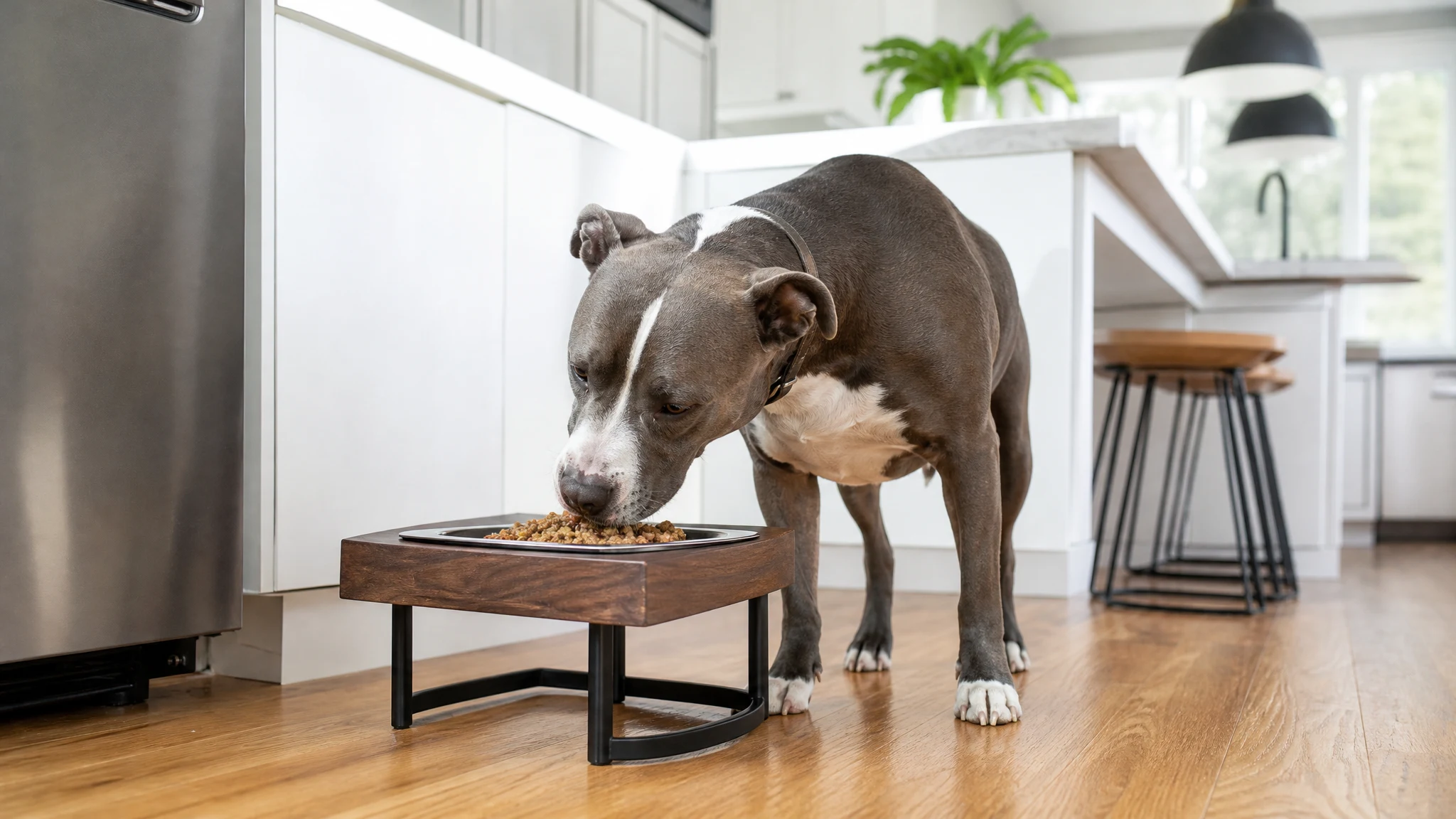
Switching foods is simple in theory and easy to get wrong in practice. A little dog feeding preparation before the first scoop of the new food makes the change smoother for your dog and less stressful for you.
This guide walks through the steps for an American Pit Bull Terrier or a Pit Bull type dog. It covers what to gather, how to read the new label, how to mix old and new food, and what to watch for. We compared label data from brand pages and breed sources. We did not run feeding trials or taste tests, and nothing here replaces your veterinarian's advice.
Why a gradual switch matters
A dog's digestive system gets used to its current food. An abrupt change can bring loose stools or an upset stomach. That is why Hill's Pet Nutrition, on its Science Diet puppy product page, advises transitioning over 7 days by mixing increasing amounts of the new food with decreasing amounts of the old.
Pit Bulls are a medium breed. The United Kennel Club breed standard lists males at 35 to 60 lb and females at 30 to 50 lb. That is a wide range, so your own dog's weight, age and activity level matter more than any breed average.
What you need before you start
- Your current food. Keep enough to last the full transition, plus a few extra days in case you need to slow down.
- The new food, with its bag or can in hand. You will need the label.
- A measuring cup, or better, a kitchen scale. Royal Canin's feeding guide notes that grams are the most accurate form of measurement, and cups are only approximate.
- A notebook or phone note. Record amounts, stool quality, appetite and energy.
- Your dog's current weight. Weigh your dog on a home or clinic scale before you begin.
- An airtight container. It keeps the new food in good condition and keeps the label handy.
Step 1: Check that the new food fits your dog's life stage
Start with the AAFCO statement on the label. It tells you whether the food is for maintenance, growth or all life stages.
Royal Canin UK offers general guidance that medium breeds are usually ready for adult food at about 12 months. No Pit Bull specific age was found, so ask your veterinarian when your puppy should switch.
Size matters for puppies too. AAFCO requires growth and all life stages foods to say whether they include growth of large size dogs, meaning 70 lb or more as an adult. Dog Food Advisor, quoting AAFCO label language, notes that large breed growth foods have a stricter calcium maximum of 1.8% on a dry matter basis, versus 2.5% for other foods. Most Pit Bulls fall below the 70 lb mark, so the large breed puppy rule generally does not apply. Whole Dog Journal notes that some nutritionists use 50 lb as a cutoff, so a very big individual may be near the line. Your veterinarian can confirm which type of puppy food suits your dog.
Some examples show why the label matters. Hill's Science Diet Adult Large Breed is described as not recommended for large breed puppies. Hill's Science Diet Puppy Large Breed is described as not recommended for adult dogs. Victor Hi-Pro Plus is labeled for all life stages except growth of large size dogs. Freshpet Vital Chicken Recipe and Nom Nom Beef Mash are labeled for all life stages, including growth of large size dogs.
Step 2: Read the label and compare calories
Look at the first five ingredients, the guaranteed analysis and the calories per cup. Calories are the detail people skip, and they matter most when you switch.
Per-cup calories vary a lot between foods. The Royal Canin Medium Adult page lists 340 kcal ME per cup. The Victor High Energy page lists 412 kcal per cup. A cup of one is not the same as a cup of the other, so copying your old cup measure can quietly over- or underfeed your dog.
Some labels do not give a per-cup figure at all. Freshpet and JustFoodForDogs pages, for example, give calories by weight or by pack. If your new food lacks a per-cup number, check the brand's feeding calculator or ask the brand directly.
Step 3: Set a starting amount from the label
Use the brand's feeding guide as a starting point, based on your dog's weight, age and activity level. It is not a fixed rule.
Here are two label examples. The Hill's Science Diet Adult Large Breed chart shows 3 1/4 cups per day for a 50 lb dog. Royal Canin's Large Adult page gives about 3 3/8 cups (318 g) per day for a 57 lb dog at moderate activity. Those are different foods with different calorie counts, so they show how much guides vary. They are not targets for your dog.
For a breakdown by age and weight, see our Pit Bull feeding chart by age and weight. Then compare it with the new food's own label.
If your dog has a health condition, is underweight or overweight, or is pregnant or nursing, confirm amounts with your veterinarian before you change anything.
Step 4: Mix old and new food over about a week
Many owners use a schedule like the one below. It follows the 7-day idea in the Hill's guidance, but the exact proportions are a common practice, not a rule from any brand. Check your new food's label for its own instructions.
| Days | Old food | New food |
|---|---|---|
| 1 to 2 | About three quarters | About one quarter |
| 3 to 4 | About half | About half |
| 5 to 6 | About one quarter | About three quarters |
| 7 | None | All new food |
Keep the total daily amount the same, based on your starting figure from Step 3. Split it across your usual meals. Weigh or measure each portion. Stir the two foods together so your dog cannot pick out only the old one.
If the new food is fresh or wet
Fresh and wet foods have different rules. JustFoodForDogs says thawed sealed meals should be used within 7 days, or 5 days once opened. Hill's Science Diet wet food lists calories per can, not per cup. Read the storage and serving notes on the brand page and follow them.
Step 5: Watch your dog and adjust
Each day, note stool quality, appetite, energy, itching and any vomiting. A slightly softer stool can happen during a change. If it continues, go back to the previous step's mix for a day or two before moving forward again.
Call your veterinarian if your dog has repeated vomiting, diarrhea that lasts, blood in the stool, refuses food, or seems unwell. Do not wait out a serious problem.
Step 6: Check body condition after a few weeks
Once your dog is fully on the new food, weigh them again. Hill's lists weight management as a diet-relevant concern for the breed, along with lean muscle. Feel the ribs and look at the waist. If your dog is gaining or losing more than you expected, adjust the amount slightly and ask your veterinarian.
Tips for a smoother transition
- Pick a calm week. Avoid starting during travel, boarding, a move or a vet procedure.
- Keep treats steady. Changing food and treats at once makes it hard to tell what caused a problem.
- Use food for training. If you use kibble as rewards, count it in the daily total. Reward-based training fits well with a measured diet.
- Keep the old bag until you finish. It gives you a fallback and a reference for ingredients.
- Take photos of both labels. If your dog has a reaction, your veterinarian can compare ingredients.
- Ask about prescription diets. Only a veterinarian prescribes these, and they are for specific medical needs.
Common mistakes to avoid
- Switching overnight. This is the most frequent cause of an upset stomach.
- Using the same cup for a different food. Calories per cup differ, as the Royal Canin and Victor figures show.
- Choosing by the front of the bag. Terms like "power" or "breed specific" are marketing. Royal Canin's Medium Adult is sized for 23 to 55 lb dogs, but no formula in our research was made specifically for Pit Bulls. Check with the brand if a label suggests otherwise.
- Feeding an adult food to a growing puppy, or the reverse. Match the AAFCO statement to your dog's life stage.
- Treating food as a medical fix. Hill's mentions hip and elbow dysplasia and skin allergies as concerns for the breed. A veterinarian decides what diet suits an individual dog, and no food on this page should be read as preventing or treating a condition.
- Adding supplements without asking. Check with your veterinarian first, and never guess at a dose.
What to expect
Many dogs adjust to a new food within one to two weeks when the change is gradual. You may see steady stools, good appetite and a stable weight. Coat and energy changes, if any, usually take longer to notice and vary from dog to dog.
No food can promise a particular result. If your dog has itchy skin, ear infections or joint concerns, talk to your veterinarian before and after changing foods.
Quick checklist
- Confirm the new food's life stage statement matches your dog.
- Compare calories per cup, or per weight, between old and new foods.
- Set a starting amount from the label and your dog's weight and activity.
- Mix old and new over about 7 days, keeping the daily total steady.
- Log stool, appetite and energy each day.
- Re-weigh after a few weeks and adjust with your veterinarian's input.
Sources
- United Kennel Club, American Pit Bull Terrier breed standard
- Hill's Pet Nutrition, American Pit Bull Terrier breed page
- Royal Canin UK, when to switch your puppy to an adult diet
- Dog Food Advisor, large breed puppy food and all life stages labels
- Whole Dog Journal, best large breed puppy food
- Royal Canin, Medium Adult product page
- Royal Canin, Large Adult product page
- Hill's Science Diet, Adult Large Breed product page
- Hill's Science Diet, Puppy Large Breed product page
- Hill's Science Diet, Adult Chicken & Barley Entree product page
- Victor, Hi-Pro Plus product page
- Victor, High Energy product page
- Freshpet, Vital Chicken Recipe product page
- Nom Nom, Beef Mash product page
- JustFoodForDogs, Beef & Russet Potato Recipe product page