Dog Probiotics for Gut Health: What the Evidence Says for Pit Bulls
General nutrition information compiled from product labels and published sources, not veterinary advice. Your veterinarian is the right person to choose a diet for your dog, especially one with a health condition.
Probiotics are sold as a fix for almost everything that goes wrong in a dog's belly. The marketing is loud. The proof, for any one product and any one dog, is usually quieter.
This guide shows you how to look at dog probiotics for gut health with a label reader's eye. It is written for owners of Pit Bull type dogs, and it stays honest about what we know and what we do not.
One note on method. We compared label data and published breed information. We did not run feeding trials or taste tests, and we have not fed any product to a dog.
What a probiotic is, and what it is not
A probiotic is a live microorganism added to food or sold as a supplement. The idea is that certain strains may support the balance of microbes in the gut. "May support" is the honest ceiling. A probiotic is not a medicine, and no food or supplement on this page prevents, treats or cures any condition.
Two things make the evidence hard to pin down. First, results depend on the strain, not just the word "probiotic." Second, a product has to contain living organisms at the end of its shelf life to do anything at all. A label that says "probiotics" without naming strains tells you very little.
What breed information says about Pit Bulls and diet
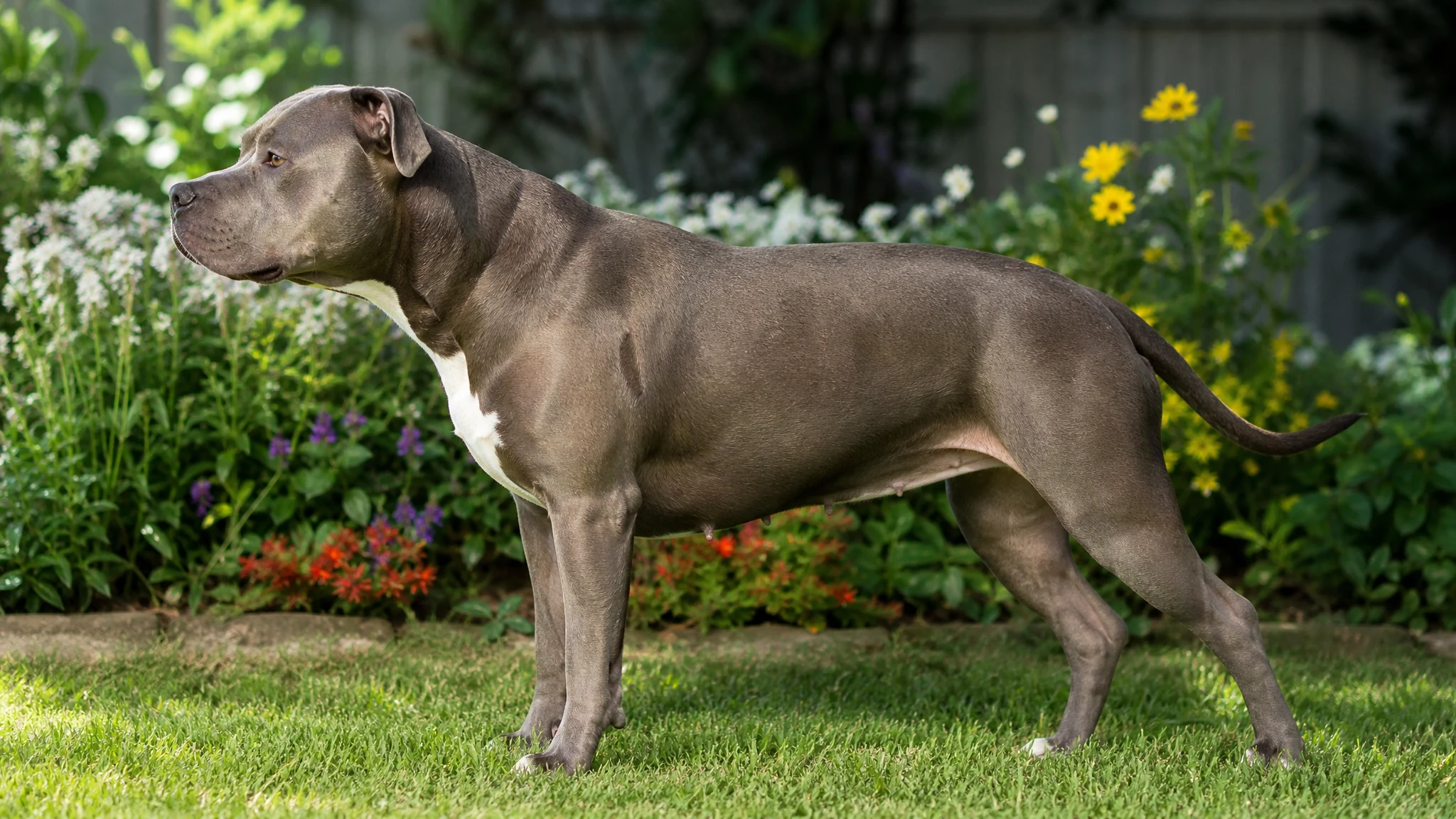
"Pit Bull" describes a type of dog. The United Kennel Club registers the American Pit Bull Terrier as a breed, and its standard lists adult males at 35 to 60 lb and females at 30 to 50 lb. That makes the breed medium sized.
Hill's Pet Nutrition, on its American Pit Bull Terrier breed page, gives a life expectancy of 12 to 14 years. The diet-related health topics on that page are hip and elbow dysplasia, skin allergies (itchy skin and ear infections), and weight management.
Those are the topics we drew from that page, and gut health is not among them. We found no Pit Bull specific probiotic recommendation from the UKC or Hill's. So any claim that Pit Bulls "need" a particular probiotic is marketing, not breed science. For more on the bigger picture, see our guide to the diet factors that matter for Pit Bulls.
Materials you need
- Your dog's current food bag or can, with the full label.
- A notebook or phone notes app for tracking stools, appetite and itching.
- A kitchen scale or the measuring cup you already use for meals.
- A list of everything your dog eats, including treats, chews and table scraps.
- The brand's own product page or customer line, for questions the label does not answer.
- An appointment with your veterinarian if the gut trouble is ongoing.
Step-by-step: how to evaluate a probiotic for your Pit Bull
Step 1. Decide whether this is a vet question first
Vomiting, blood in the stool, black stools, a swollen belly, weight loss, or diarrhea that lasts more than a day or two call for a veterinarian. Do not try a supplement first. A probiotic can delay a diagnosis. A veterinarian decides what is right for an individual dog, and only a veterinarian prescribes a prescription diet.
Step 2. Record a baseline for one to two weeks
Write down stool quality, gas, appetite, itching and energy each day. Without a baseline you cannot tell later whether anything changed. Many owners skip this step and then rely on memory, which is unreliable.
Step 3. Read the food label you already use
Start with the food, since it is the biggest part of what your dog eats. Check the AAFCO statement, which tells you whether the food is complete and balanced and for which life stage.
Statements differ by brand. Royal Canin's Medium Adult says it is formulated to meet AAFCO maintenance levels. Hill's Science Diet Adult Large Breed says animal feeding tests using AAFCO procedures substantiate its nutrition. Neither is better or worse on that point alone. They are different ways of substantiating a food.
The label data we compared for those foods did not describe added probiotics. If you want to know whether a food contains them, and which strains, ask the brand directly.
Step 4. Match the food to your dog's life stage and size
Royal Canin UK gives about 12 months as a general point to move a medium breed puppy to an adult diet. A Pit Bull is medium sized, below AAFCO's 70 lb cutoff for large-size growth. The large-breed puppy rule, with its stricter calcium maximum, generally does not apply. A very big individual may sit closer to the line, so ask your veterinarian.
A food that is a mismatch for age or size is a more likely source of trouble than a missing probiotic.
Step 5. If you still want a probiotic, check the label
Look for these items on any product:
- The full strain name, not just the genus or the word "probiotic."
- A statement that the count holds through the expiration date, not only at manufacture.
- A "made for dogs" statement. Human products can contain ingredients that do not suit dogs.
- Storage directions, since some products need refrigeration.
- A way to reach the maker with questions.
We are not naming a probiotic product here. The research we relied on did not give label data for one, and we will not invent any. We also give no amounts. Follow the product label and your veterinarian's advice.
Step 6. Introduce it slowly and change one thing at a time
Start the new product on its own, with no new food, treat or chew at the same time. If you change several things at once, you cannot tell which one caused a change. Hill's suggests moving to a new food over 7 days by mixing increasing amounts of new food with decreasing amounts of old. That same gradual idea is sensible for any addition to the diet.
Step 7. Watch, then review with your veterinarian
Keep your notes going for several weeks. Stop the product and call your veterinarian if you see vomiting, worse diarrhea, itching, or a drop in appetite. Bring your notes to the next visit, since they are far more useful than a general impression.
Tips that help
- Keep meals steady. Feed at the same times, in the same amounts. Treat feeding guides as starting points, as Hill's does when it says to adjust amounts to keep an optimal weight.
- Count the treats. Chews and table scraps can upset a stomach and add calories.
- Watch weight. Weight management is one of the diet topics on the Hill's breed page. Extra weight is worth discussing with your veterinarian whatever the gut is doing.
- Ask the brand for proof. A company that stands behind a strain can tell you which one it is and how it stays viable.
Common mistakes to avoid
- Treating a symptom with a supplement. Ongoing loose stools need an exam, not a guess.
- Starting two or three products at once. You will not know what worked or what caused trouble.
- Trusting "Pit Bull formula" claims. We found no Pit Bull specific formula backed by a breed source.
- Assuming fresh or grain-free means probiotic. Neither is the same as containing live cultures. Fresh foods such as Freshpet, Nom Nom and JustFoodForDogs each have their own label data, and none of what we compared is a probiotic claim.
- Switching foods too fast. A sudden change can itself upset digestion.
- Using a probiotic as a substitute for a complete diet. It sits on top of good feeding, not in place of it.
What results to expect
Be realistic. Some owners report firmer stools or less gas after adding a probiotic, and some see no change. A probiotic may support digestive balance in some dogs, but it is not shown to prevent or treat any disease, and nothing here promises a result.
If your notes show no change after the trial period, that is useful information too. Stop the product, and talk with your veterinarian about the next step. If something improves, you still cannot be sure the product was the cause, because dogs' stools vary day to day for many reasons.
The short version
The evidence for any single probiotic in a Pit Bull is limited, and breed sources do not list one as a need. Start with a vet check for ongoing problems, fix the basics of age, size and food, then change one thing at a time and keep notes.
Sources
- United Kennel Club, American Pit Bull Terrier breed standard
- Hill's Pet Nutrition, American Pit Bull Terrier breed page
- Royal Canin UK, when to switch your puppy to an adult diet
- Royal Canin, Medium Adult product page
- Hill's Science Diet, Adult Large Breed product page
- Hill's Science Diet, Puppy Large Breed product page
- Dog Food Advisor, large breed puppy food and all life stages labels (secondary source quoting AAFCO label language)