Human Foods Pit Bulls Should Never Eat
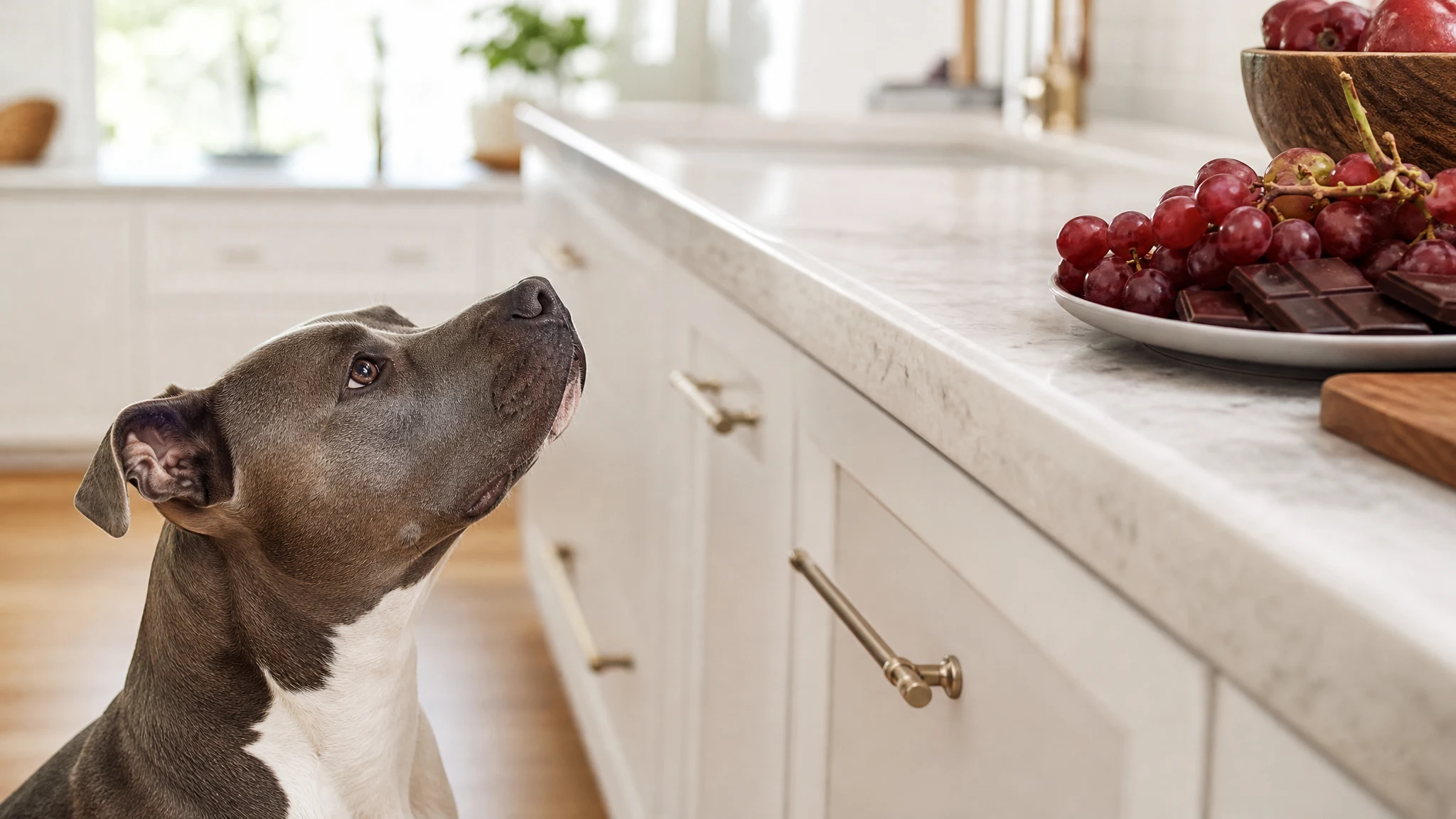
General nutrition information compiled from product labels and published sources, not veterinary advice. Your veterinarian is the right person to choose a diet for your dog, especially one with a health condition.
Many human foods dogs can't eat look harmless on a plate. Pit Bulls are medium, muscular dogs, and many are food-motivated, so a dropped snack or an open trash can is a real risk. This page answers the most common questions about what can Pit Bulls not eat, which snacks are generally safer, and what to do if something goes wrong.
The toxic foods below come from the ASPCA Animal Poison Control Center's list of people foods to avoid. Any dog can react differently, so a veterinarian decides what is right for your individual dog.
The Basics
What can Pit Bulls not eat?
The ASPCA lists chocolate, grapes and raisins, xylitol, onions and garlic, macadamia nuts, alcohol and caffeine among the foods dogs should not have. Raw yeast dough, very salty snacks and cooked bones are also on the avoid list. The sections below explain each one.
Are the foods Pit Bulls can't eat different from other dogs?
No. The ASPCA toxic food list applies to dogs in general, and nothing in it is specific to the Pit Bull. What does vary is size and appetite, which affect how quickly a problem can develop and how often a dog gets into things.
Is a small amount of a toxic food still a problem?
It can be. How a dog reacts depends on the food, the amount and the individual dog, and that is hard to judge at home. If your dog ate something on the avoid list, treat it as a call to make rather than something to wait out.
Toxic Foods and Drinks
Can Pit Bulls eat chocolate?
No. The ASPCA lists chocolate, especially dark chocolate and baking chocolate, as dangerous to dogs because it contains methylxanthines. Cocoa powder and brownies count too.
Can Pit Bulls eat grapes or raisins?
No. The ASPCA warns that grapes and raisins can cause kidney failure in dogs. Raisins hide in trail mix, cereal and baked goods, so check what is in the snack before sharing.
What is xylitol and why is it dangerous?
Xylitol is a sugar substitute. The ASPCA lists it as toxic to dogs. It appears in sugar-free gum, some peanut butters, candy, baked goods and certain toothpastes, so read ingredient labels before you share anything.
Can Pit Bulls eat onions and garlic?
No. The ASPCA says onions, garlic, chives and leeks can damage a dog's red blood cells. Cooked, raw and powdered forms all count, which matters when you think about leftovers seasoned with onion or garlic powder.
Are macadamia nuts bad for dogs?
Yes. The ASPCA lists macadamia nuts as toxic to dogs and notes they can cause weakness and other signs. Cookies and snack mixes containing them are best kept out of reach.
Can Pit Bulls have alcohol?
No. The ASPCA warns that alcohol can seriously affect a dog's system. Spilled drinks, unattended cocktails and foods made with alcohol are the usual sources.
What about coffee, tea and caffeine?
Avoid them. The ASPCA includes caffeine in coffee, tea, and energy products on its list of dangers. Used grounds and tea bags in an open trash can are easy to overlook.
Is raw bread dough dangerous?
Yes. The ASPCA warns that raw yeast dough can rise in the stomach and cause serious problems. Keep rising dough covered and well out of reach, since a determined dog can get to counters.
What about fatty scraps, salty snacks and cooked bones?
The ASPCA advises against feeding fatty trimmings, very salty foods and cooked bones. Rich scraps can upset a dog's digestion, and bones can splinter. Moldy food and garbage are also worth keeping away from your dog.
Safe Snacks and Treats
Can Pit Bulls eat vegetables and fruit?
Some plain fruits and vegetables, such as carrot pieces or blueberries, are commonly offered as dog snacks. Offer them plain, with no seasoning, and avoid anything on the toxic list above. Ask your veterinarian which ones suit your dog.
Can Pit Bulls eat peanut butter?
Some can, but you must read the label first. If xylitol is listed, do not give it to your dog. Choose a plain product and check with your veterinarian.
Can Pit Bulls eat plain cooked meat or eggs?
Plain, fully cooked meat or egg without onion, garlic, salt or heavy fat is a common occasional treat. Remove all bones first. Keep portions small, since treats add calories on top of regular meals.
How many treats are too many for a Pit Bull?
Hill's Pet Nutrition lists weight management, including keeping a healthy weight and lean muscle, as a diet-related concern for the breed. Treats should stay a small part of the day's food, and your veterinarian can tell you what that means for your dog. If you reduce meals to make room for treats, ask first.
Skin, Joints and Special Diets
Should I give a Pit Bull with itchy skin new human foods to test?
Hill's lists skin allergies, with itchy skin and ear infections, among the concerns for the breed. Adding table scraps makes it harder to know what is causing a reaction. Talk with your veterinarian before changing foods, and let them guide any diet trial.
Can human food replace dog food?
Table food is not a substitute for a complete and balanced dog food. A dog food label carries an AAFCO statement saying whether it is complete and balanced for a life stage. Our comparison of dog foods by label data explains how to read that statement. We compared label data only and did not run feeding trials or taste tests.
If Your Dog Eats Something Toxic
What should I do first if my Pit Bull eats something toxic?
Call your veterinarian or the ASPCA Animal Poison Control Center right away. Have the food, the packaging and an estimate of how much your dog ate ready. Do not wait for symptoms to appear.
Should I make my dog vomit at home?
Only if a veterinarian or poison control tells you to. Some substances cause more harm coming back up, and the right step depends on what was eaten. Follow professional instructions rather than internet advice.
How do I find the right phone number?
Check the ASPCA Animal Poison Control Center's website for its current number and any consultation fee. Save it, and your veterinarian's and nearest emergency clinic's numbers, in your phone before you need them.