Is Health Extension a Good Fit for a Pit Bull?
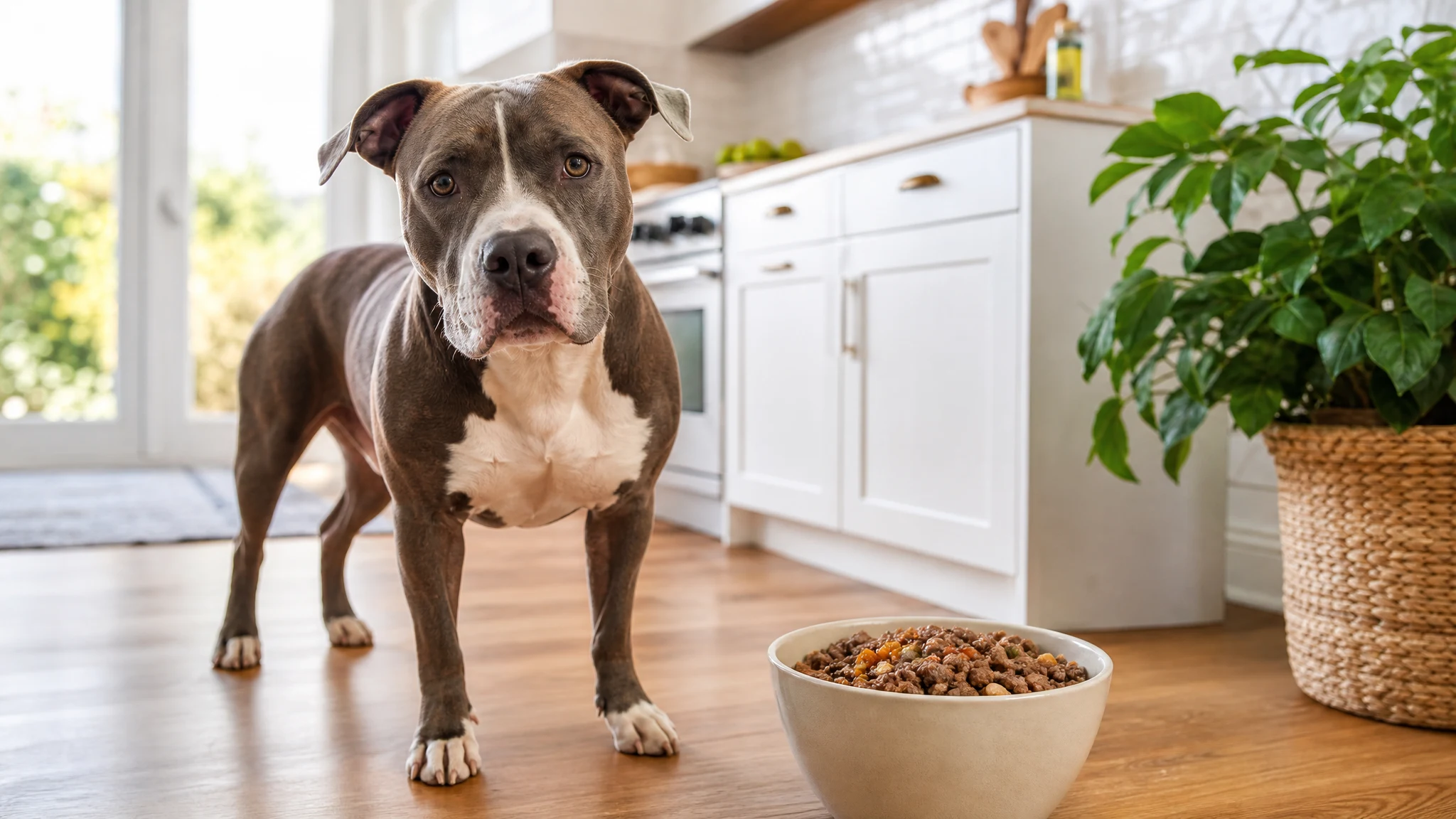
General nutrition information compiled from product labels and published sources, not veterinary advice. Your veterinarian is the right person to choose a diet for your dog, especially one with a health condition.
No label can tell you in advance whether a food suits your dog. A label can show whether a food is built for your dog's size and life stage, and how its numbers compare with other foods. This guide walks through that check for health extension dog food, step by step.
We did not feed, taste or trial any food. Everything below is a comparison of label data. We also do not have the label details for Health Extension's recipes on hand. For that brand, you will read the current label on the brand's own website and apply the steps here.
What you need before you start
- The bag, can or product page for the Health Extension recipe you are considering.
- Your dog's age, current weight and body condition, ideally confirmed by your veterinarian.
- A pen or notes app to copy down five items: the AAFCO statement, life stage, first five ingredients, guaranteed analysis and calories per cup.
- Your dog's current food label, for a side-by-side comparison.
Step 1: Know what size dog you are feeding
"Pit Bull" is a type, not a single registry breed. The United Kennel Club lists the American Pit Bull Terrier as a medium breed. Its standard gives males 35 to 60 lb and females 30 to 50 lb. Hill's Pet Nutrition's breed page gives a wider range of 30 to 60 lb, with males heavier.
Many Pit Bulls are mixes, so use your own dog's weight, not the standard. Write down the weight your veterinarian considers healthy.
Step 2: Find the AAFCO statement
Look for a sentence near the ingredient list that says the food is formulated to meet, or has been tested to meet, the AAFCO Dog Food Nutrient Profiles. Without it, the food is not labeled as complete and balanced, and you should skip it as a main diet.
Note which kind of statement it is. Some foods say "formulated to meet" the profiles. Others say animal feeding tests using AAFCO procedures substantiate the claim. Both appear on real labels. Royal Canin Medium Adult uses the formulated wording, while Hill's Science Diet Adult Large Breed cites feeding tests.
Step 3: Match the life stage
The statement names the stage: growth, maintenance or all life stages. Check that it matches your dog.
For timing, Royal Canin UK gives about 12 months as the general point for moving medium-sized breeds to an adult diet. It states no Pit Bull-specific age. Ask your veterinarian when to switch your own dog.
Then read the large-size wording. The Dog Food Advisor, quoting AAFCO label language, explains that growth and all-life-stages foods must say whether they include or exclude growth of large dogs, meaning 70 lb or more as an adult. Large-breed puppy diets have a stricter calcium maximum of 1.8% on a dry matter basis, against 2.5% for other foods. Whole Dog Journal reports the same figures.
Most Pit Bulls fall under that 70 lb line, so the large-breed puppy rule generally does not apply. Whole Dog Journal notes that some nutritionists use 50 lb as the cutoff, so a very big dog could be close. A veterinarian should confirm for your dog.
Step 4: Read the first five ingredients
Ingredients are listed by weight, so the first five give the general makeup of the food. Write them down exactly as printed. Real examples show how varied they are:
- Royal Canin Medium Adult: brewers rice, chicken by-product meal, oat groats, wheat, corn protein meal.
- Victor High Energy: beef meal, grain sorghum, whole grain millet, chicken fat, chicken meal.
- Freshpet Vital Chicken Recipe: chicken, chicken liver, peas, carrots, chicken broth.
An ingredient list is a description, not a verdict. Marketing words on the front of a bag count for less than what the back actually lists.
Step 5: Compare protein, fat and calories
Copy the guaranteed analysis minimums and the calories per cup from the Health Extension label. Then line them up against foods whose label data we have. The numbers below come from each brand's own product page.
| Food | Life stage on label | Protein (min) | Fat (min) | Calories |
|---|---|---|---|---|
| Royal Canin Medium Adult (dry) | Adult, 23 to 55 lb | 23.0% | 12.0% | 340 kcal per cup |
| Victor High Energy (dry) | All life stages except large-size growth | 24.0% | 20.0% | 412 kcal per cup |
| Victor Hi-Pro Plus (dry) | All life stages except large-size growth | 30.0% | 20.0% | 406 kcal per cup |
| Freshpet Vital Chicken (fresh) | All life stages, including large-size growth | 9.5% | 7.0% | Not given per cup |
Do not compare a fresh or canned food directly with a dry one. Moisture changes the percentages, so a 9.5% protein fresh food is not automatically lower in protein than a 23% dry food. Compare like with like, or convert to dry matter.
Calories matter as much as percentages. Hill's lists weight management among the diet-relevant topics for the breed, and the difference between 340 and 412 kcal per cup adds up over a month of daily scoops.
For a wider look at how several foods line up, see our Pit Bull foods compared by label data.
Step 6: Treat the feeding guide as a starting point
Every brand's feeding chart is a starting estimate. Royal Canin says its guide is only a guide, and Hill's says to adjust amounts to maintain optimal weight. Health Extension's chart is the one to follow for its own food. Begin there, then adjust based on your dog's body condition and your veterinarian's advice.
Step 7: Switch gradually and check with your veterinarian
Hill's suggests moving to a new food over 7 days, mixing increasing amounts of the new food with decreasing amounts of the old. That is a reasonable pattern for any change.
Hill's lists hip and elbow dysplasia, skin allergies and weight management as diet-relevant topics for the breed. Food does not prevent or treat any of these. If your dog has itchy skin, ear problems, joint concerns or a weight issue, your veterinarian decides what to feed. Prescription diets are something only a veterinarian prescribes.
Tips
- Check the brand's own website for the current label. Recipes and wording change.
- Look at the calories per cup before buying. Some labels give only calories per kilogram or per can, so you may need to ask the brand.
- Kibble size is often not listed. If your dog gulps food, ask the brand directly.
- Weigh your dog every few weeks during a change and note any change in stool, appetite or skin.
Common mistakes
- Choosing a food because it is marketed to "bully breeds" or to muscular dogs. No label data we found shows a Pit Bull-specific formula.
- Feeding a large-breed puppy food to a Pit Bull without a veterinarian's advice. A food can be wrong for an adult. Hill's says its large breed puppy food is not recommended for adult dogs.
- Comparing protein across dry, canned and fresh foods without adjusting for moisture.
- Changing foods all at once.
- Assuming a food with grains or without grains is better. Read the whole label.
What to expect
If a food fits your dog, you may see steady energy, normal stools and a stable weight over several weeks. Results vary from dog to dog, and no food can promise a particular outcome. If you notice loose stools, vomiting, constant itching or weight changes, stop the switch and contact your veterinarian.
So is Health Extension a good fit? It can be, if the recipe you pick states a complete-and-balanced AAFCO statement for your dog's life stage, fits your dog's calorie needs and suits your veterinarian's advice. Check the brand's own page for the exact recipe, then run the seven steps above.
Sources
- United Kennel Club, American Pit Bull Terrier breed standard
- Hill's Pet Nutrition, American Pit Bull Terrier breed page
- Royal Canin UK, when to switch your puppy to an adult diet
- Whole Dog Journal, best large breed puppy food
- Dog Food Advisor, large breed puppy food and all life stages labels
- Royal Canin Medium Adult product page
- Victor High Energy product page
- Victor Hi-Pro Plus product page
- Freshpet Vital Chicken Recipe product page
- Hill's Science Diet Adult Large Breed product page