Is 4Health a Good Fit for a Pit Bull's Diet?
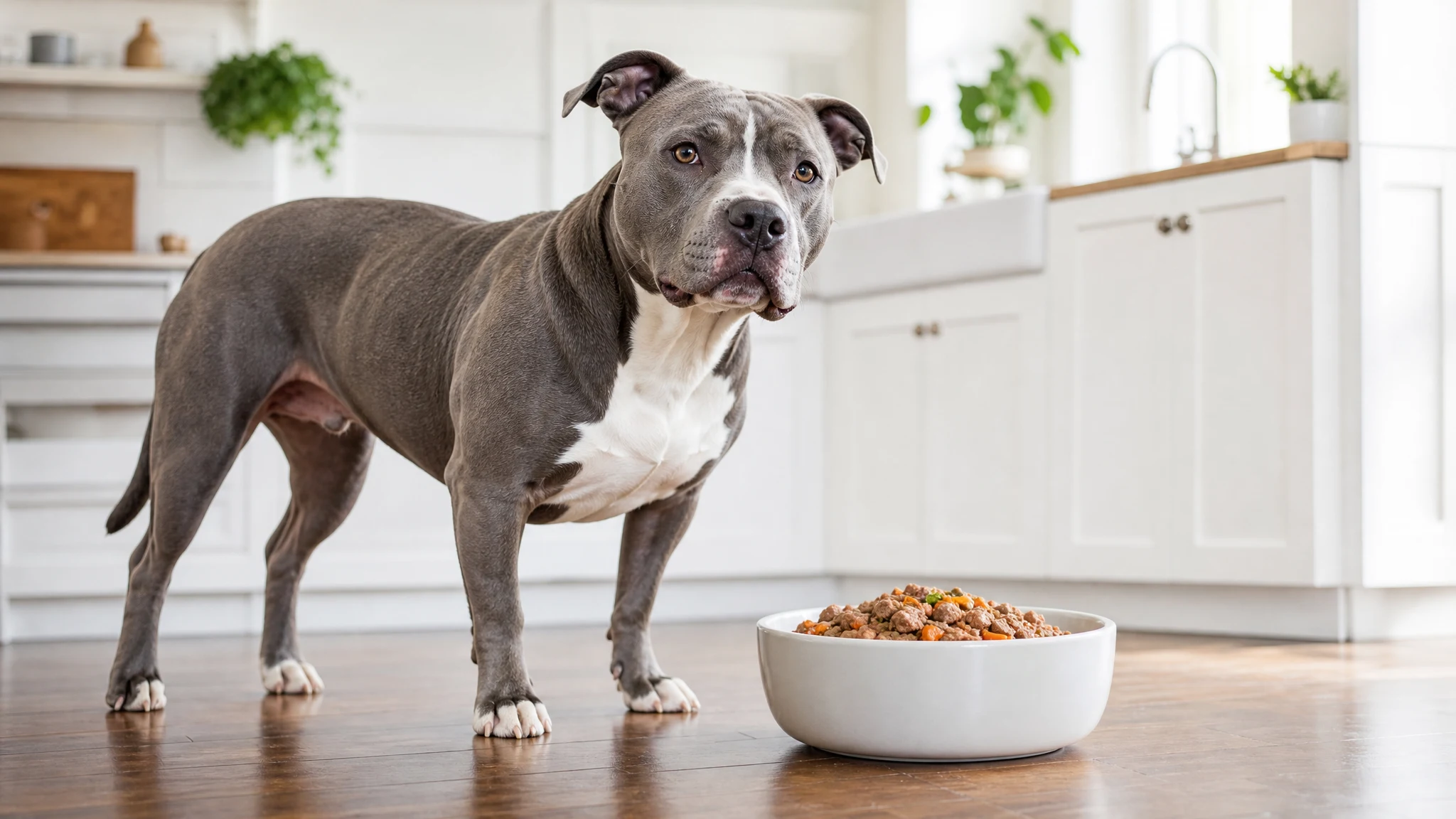
General nutrition information compiled from product labels and published sources, not veterinary advice. Your veterinarian is the right person to choose a diet for your dog, especially one with a health condition.
Owners often ask whether 4 health dog food suits a Pit Bull. The honest answer is that no bag can be called a good fit until you read its label next to your own dog's needs.
We do not have label data for any 4Health recipe in our research, so we will not describe its ingredients, protein or calories. This guide shows you how to read the bag yourself and decide if a recipe is worth a conversation with your veterinarian. We compared label data only. We did not run feeding trials or taste tests.
What you need before you start
- The bag or the brand's own product page for the 4Health recipe you are considering.
- Your dog's current weight and age. A kitchen scale or a recent vet weigh-in works.
- A pen and paper, or a notes app, to write down the numbers.
- The name of the food your dog eats now, so you can compare.
- Your veterinarian's contact details for any health questions.
First, know what "Pit Bull" means for feeding
The United Kennel Club lists the American Pit Bull Terrier as a breed. "Pit Bull" more broadly is a type of dog, not one registry breed. That matters because dogs in the type vary in size.
The United Kennel Club breed standard gives adult weights of 35 to 60 lb for males and 30 to 50 lb for females. It calls the breed medium in size. Hill's Pet Nutrition gives a similar 30 to 60 lb range, with males heavier. Hill's also lists a life expectancy of 12 to 14 years.
Those numbers help you pick a size category when you read a label. They are not a feeding plan for your dog.
Step-by-step: how to judge a 4Health recipe for your Pit Bull
Step 1: Match the life stage on the label to your dog
Find the AAFCO statement, usually in small print near the ingredient list. It tells you whether the food is for maintenance (adult), growth, or all life stages.
A puppy needs a growth or all-life-stages statement. An adult can eat a maintenance or all-life-stages food. Royal Canin UK suggests about 12 months as the usual point to switch a medium-sized puppy to an adult diet. It gives this as general guidance, not a Pit Bull rule. Ask your veterinarian about the right timing for your dog.
Step 2: Check the large-breed wording
AAFCO requires growth and all-life-stages foods to say whether they include or exclude growth of large dogs, meaning 70 lb or more as an adult. Dog Food Advisor explains this label language. The large-breed growth rule caps calcium at 1.8% on a dry matter basis, versus 2.5% for other foods, according to Whole Dog Journal.
Most Pit Bulls are under that 70 lb cutoff, so the large-breed puppy rule generally does not apply. Whole Dog Journal notes that some nutritionists use 50 lb as the cutoff. A very big male could sit near that line. Your veterinarian should confirm which applies.
Step 3: Write down the guaranteed analysis
Record the minimum crude protein, minimum crude fat and maximum fiber. These are minimums and maximums, not exact amounts. A food can contain more than the minimum.
Be careful with wet or fresh foods. Their water content makes the percentages look small next to dry food. Compare dry with dry. Brands that publish dry matter averages are showing a different calculation from the guaranteed minimum, so do not mix the two.
Step 4: Find the calories per cup
Calories decide how much you feed and how fast a dog gains weight. Hill's lists weight management, with a healthy weight and lean muscle, among the diet-related topics for the breed. Check the kcal per cup on the brand's page or bag. If the brand does not list it, ask the brand directly.
Step 5: Read the first five ingredients
Ingredients are listed by weight before cooking. The first five give you a rough sense of the recipe. Note whether they are named meats, meals, grains or other items.
Do not treat a long ingredient list or a "natural" claim as proof of quality. The AAFCO statement and the analysis tell you more than the front of the bag.
Step 6: Compare against reference foods
Put your 4Health numbers beside a few foods with published label data. The table below uses only what each brand lists on its own page.
| Food | AAFCO life stage | Protein (min) | Fat (min) | kcal per cup | First ingredients |
|---|---|---|---|---|---|
| Royal Canin Medium Adult | Adult maintenance, 23 to 55 lb | 23.0% | 12.0% | 340 | Brewers rice, chicken by-product meal, oat groats |
| Victor Hi-Pro Plus | All life stages, except growth of large dogs (70 lb or more as adults) | 30.0% | 20.0% | 406 | Beef meal, grain sorghum, chicken fat |
| Victor High Energy | All life stages, except growth of large dogs (70 lb or more as adults) | 24.0% | 20.0% | 412 | Beef meal, grain sorghum, whole grain millet |
| Hill's Science Diet Adult Large Breed Chicken & Barley | Adult maintenance, large breed | Page lists a 23.8% dry matter average, no minimum | Page lists a 15% dry matter average, no minimum | 365 | Chicken, cracked pearled barley, brown rice |
The spread is wide. Calories per cup run from 340 to 412 in this short list. The same cup of two different foods can mean a very different daily intake. For a fuller side-by-side, see our comparison of foods by label data.
Step 7: Use the feeding guide as a starting point
Every brand's chart is a starting point. Royal Canin says its Large Adult guide depends on target weight and activity level. Hill's tells owners to adjust amounts to maintain an optimal weight. Weigh your dog every few weeks and adjust with your veterinarian's input.
Step 8: Take health questions to your veterinarian
Hill's lists hip and elbow dysplasia and skin allergies, such as itchy skin and ear infections, as health topics for the breed. Diet is one piece of those conversations, and no food on a shelf prevents or treats them. Prescription diets come only from a veterinarian. If your dog has symptoms, ask your vet before switching foods.
Step 9: Switch slowly if you decide to change
Hill's suggests moving to a new food over 7 days, mixing more new food and less old food each day. Watch stool, appetite and itching during the change. If something seems off, pause and call your vet.
Tips
- Check the brand's own page for the exact recipe name. Brands often sell several formulas with different life stages.
- If kibble size is not listed, ask the brand. We found no kibble size for most of the foods we compared, so we cannot say what suits a Pit Bull's jaw or eating speed.
- Keep notes on each food you try, including the date and your dog's weight.
- Ask about any claim you cannot verify, such as "premium" or "holistic."
Common mistakes to avoid
- Buying by the bag photo. The picture of an athletic dog tells you nothing about the recipe.
- Feeding a growth food forever. A food for puppies may not suit an adult, and some adult foods are not for puppies.
- Comparing wet and dry percentages directly. Water content distorts the numbers.
- Using the bag chart as a rule. Activity, age and body condition change what your dog needs.
- Assuming a high-protein or high-fat food is better. Victor Hi-Pro Plus lists 20% fat and 406 kcal per cup, which could be too rich for a dog that gains weight easily. A veterinarian can help you judge that.
- Treating a label as a health promise. A complete-and-balanced statement means nutritional adequacy, not protection from disease.
What results to expect
A food that matches your dog's life stage and calorie needs may help support steady weight, normal stools and consistent energy. Results vary from dog to dog, and no label guarantees them. Give a new food several weeks and watch body condition, coat and appetite. Share what you see with your veterinarian.
Whether 4 health dog food is right for your Pit Bull depends on the specific recipe. If its AAFCO statement fits your dog's stage, its calories fit your dog's weight, and your vet agrees, it can be a reasonable candidate. If the numbers are missing, ask the brand before you buy.
Sources
- United Kennel Club, American Pit Bull Terrier breed standard
- Hill's Pet Nutrition, American Pit Bull Terrier breed page
- Royal Canin UK, when to switch your puppy to an adult diet
- Whole Dog Journal, best large breed puppy food
- Dog Food Advisor, large breed puppy food and all life stages labels
- Royal Canin, Medium Adult product page
- Victor, Hi-Pro Plus product page
- Victor, High Energy product page
- Hill's Science Diet, Adult Large Breed product page