Health Extension Dog Food for Pit Bulls: How It Compares on the Label
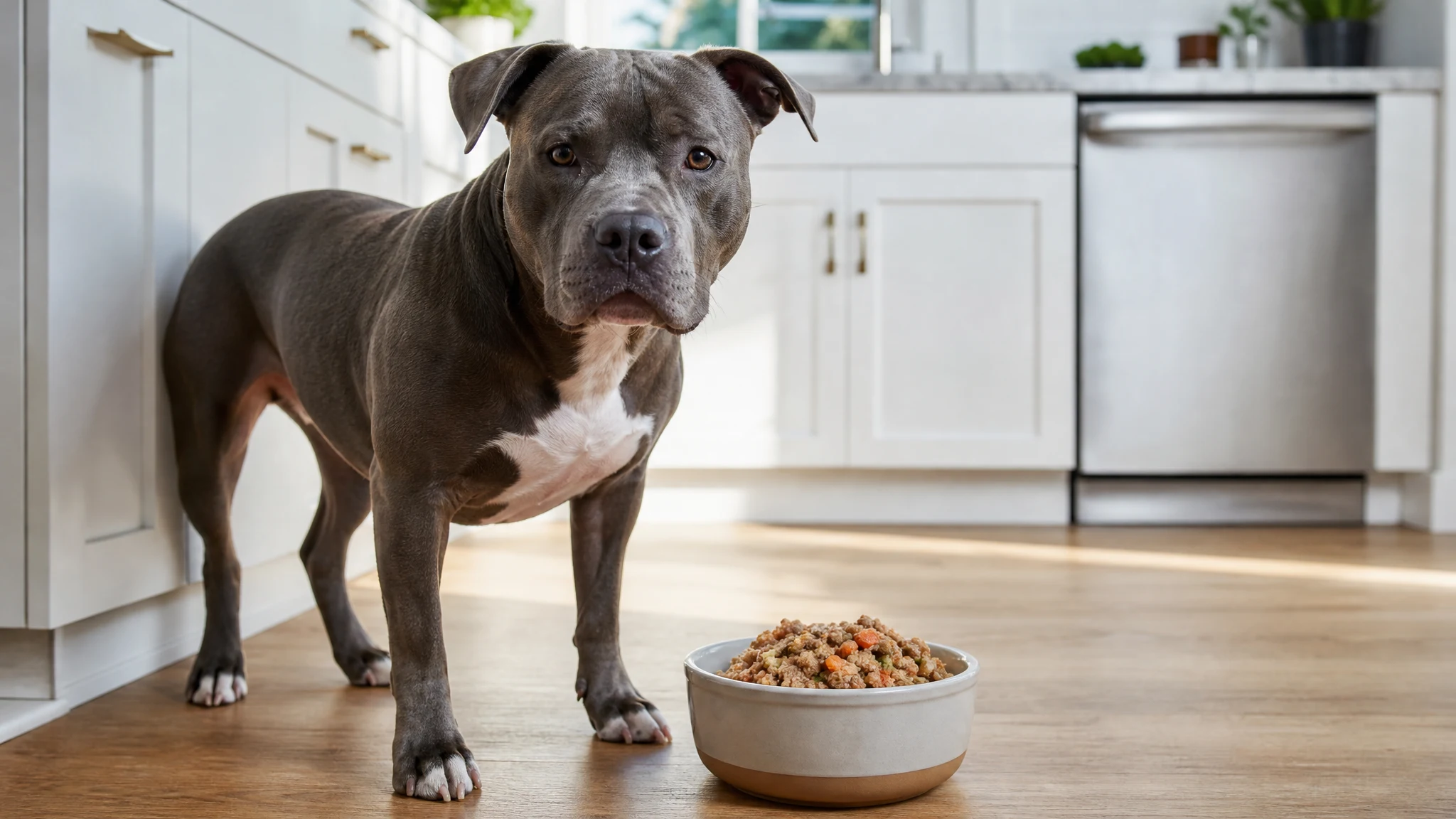
General nutrition information compiled from product labels and published sources, not veterinary advice. Your veterinarian is the right person to choose a diet for your dog, especially one with a health condition.
Health Extension is a brand many Pit Bull owners ask about. This guide shows you how to compare health extension dog food with other foods using only the label. You can then judge for yourself whether a recipe fits your dog.
We compared label data. We did not run feeding trials or taste tests, and we did not feed any of these foods to dogs. Nothing here says a food will prevent or treat a health problem.
One more limit: we do not have verified label data for any Health Extension recipe. So this article does not quote its numbers. It teaches you the method and shows how other brands look when read the same way. Fill in the Health Extension row yourself from the brand's own product page.
First, know what you are feeding
"Pit Bull" is a type of dog, not a single registry breed. The United Kennel Club recognizes the American Pit Bull Terrier. Its breed standard lists males at 35 to 60 lb and females at 30 to 50 lb, and calls the breed medium in size.
Hill's Pet Nutrition gives a life expectancy of 12 to 14 years for the breed. Its breed page also mentions hip and elbow dysplasia, skin allergies and weight management as diet-relevant topics. A food label cannot settle any of these. Your veterinarian decides what is right for an individual dog.
Materials you need
- The Health Extension product page for each recipe you are considering, or the bag itself.
- The same details from one or two other brands, so you have something to compare against.
- Your dog's current weight, age and activity level.
- A note of any diet instructions from your veterinarian.
- A pen and paper, or a simple spreadsheet.
Step-by-step: compare the label
Step 1: Match the life stage
Find the AAFCO statement. It is a short paragraph, usually near the guaranteed analysis. It says whether the food is for maintenance (adults), growth, or all life stages.
A Pit Bull is generally treated as an adult at about 12 months, according to Royal Canin UK's general guidance for medium breeds. No Pit Bull specific age was found, so ask your veterinarian about the switch.
Step 2: Check the large-breed wording
AAFCO requires growth and all-life-stages foods to say whether they include or exclude growth of large dogs, meaning 70 lb or more as an adult. Dog Food Advisor, quoting AAFCO label language, explains that large-breed growth foods have a stricter calcium maximum of 1.8% on a dry matter basis, versus 2.5% for other foods.
Most Pit Bulls are under that 70 lb line. Whole Dog Journal notes that some nutritionists use 50 lb as a large-breed cutoff, so a very big individual may be near it. Your veterinarian should confirm which puppy food suits your dog.
Step 3: Read the first five ingredients
Ingredients are listed by weight before cooking. The first five tell you the main building blocks. Write them down exactly as printed. Do not guess at ingredients that are not on the label.
Be skeptical of front-of-bag claims. Words like "premium" or "natural" are marketing. The ingredient list and the AAFCO statement are the parts that matter.
Step 4: Record protein, fat and fiber
The guaranteed analysis lists minimum protein and fat, and maximum fiber. Copy the numbers as printed. Some brands, such as Hill's Science Diet, publish dry matter averages on the web page instead of guaranteed minimums. Note which kind of number you have.
Step 5: Compare calories per cup
Calories decide how much you feed. Two foods with similar protein can differ a lot in energy per cup. If a page gives calories per kilogram or per can, write that down and do not convert it by guessing.
Step 6: Put the numbers side by side
Here is how several brands read on their own label pages. Add a row for the Health Extension recipe you are considering.
| Food | AAFCO life stage | Protein / fat (label minimum) | Calories | First ingredients |
|---|---|---|---|---|
| Royal Canin Medium Adult (dry) | Adult maintenance, 23 to 55 lb dogs | 23% / 12% | 340 kcal per cup | Brewers rice, chicken by-product meal, oat groats, wheat, corn protein meal |
| Victor Hi-Pro Plus (dry) | All life stages except large-size growth | 30% / 20% | 406 kcal per cup | Beef meal, grain sorghum, chicken fat, whole grain millet, blood meal |
| Victor High Energy (dry) | All life stages except large-size growth | 24% / 20% | 412 kcal per cup | Beef meal, grain sorghum, whole grain millet, chicken fat, chicken meal |
| Hill's Science Diet Adult Large Breed (dry) | Adult maintenance, feeding tests | 23.8% / 15% (dry matter averages, not minimums) | 365 kcal per cup | Chicken, cracked pearled barley, brown rice, brewers rice, whole grain wheat |
| Nom Nom Beef Mash (fresh) | All life stages, including large-size growth | 8% / 5% | 201 kcal per cup | Ground beef, russet potatoes, eggs, carrots, peas |
| Health Extension (your recipe) | Check the brand's page | Check the brand's page | Check the brand's page | Check the brand's page |
Do not compare dry and fresh percentages directly. Fresh foods hold much more water, so their protein and fat numbers look low next to kibble. Fresh foods like Freshpet and JustFoodForDogs publish calories per kilogram or per pack rather than per cup, so even the calorie row needs care.
For a wider look at how brands stack up, see our page on dog foods compared by label data.
Step 7: Use the feeding guide as a starting point
Every feeding chart is a guide, not a prescription. Royal Canin says grams are the most accurate way to measure. Hill's tells owners to adjust amounts to maintain optimal weight. Nom Nom says its recommendations may vary with age, weight and activity level.
Start at the chart amount for your dog's weight. Then watch body condition and adjust slowly. Your veterinarian can tell you what a healthy weight looks like for your dog.
Step 8: Switch gradually
Hill's suggests moving to a new food over 7 days, mixing more of the new food with less of the old each day. If your dog has loose stools or stops eating, pause and call your veterinarian.
Tips
- Check the brand's own page for each recipe. Formulas within one brand can differ a lot.
- Look for the exact AAFCO wording. "Formulated to meet" and "animal feeding tests substantiate" are two different methods. Hill's and JustFoodForDogs cite feeding tests for the foods listed above. The other foods in the table use the "formulated to meet" wording.
- Kibble size was not listed on most of the pages we read. If your dog gulps food, ask the brand before you buy.
- If your dog has itchy skin, ear infections or joint concerns, talk to your veterinarian before changing foods. Diet may be one part of a larger plan.
- Only a veterinarian can prescribe a therapeutic diet.
Common mistakes to avoid
- Choosing by protein alone. A high number does not tell you how the food suits your dog. Fat, calories and your dog's activity level matter too.
- Buying a large-breed formula by default. Hill's Adult Large Breed, for example, lists an ideal weight of 55 to 110 lb. Many Pit Bulls are lighter than that. Check the weight range printed for each product.
- Feeding a puppy food made for large breeds when it is not needed. Ask your veterinarian first.
- Comparing across forms without adjusting. Dry, wet and fresh foods carry different moisture levels.
- Treating a label as a health promise. A label describes what is in the food. It does not tell you what the food will do for one dog.
- Trusting a retailer's summary. Retail listings can be outdated. Use the brand's page.
What to expect
Done carefully, this comparison may help you understand what you are buying and why two foods differ. It may also help you spot a food that does not match your dog's life stage or size.
It will not tell you how your dog will do on a food. Coat, stool quality, energy and weight change over weeks, and many things affect them. Track your dog's weight and body condition, and share what you see with your veterinarian.
If a Health Extension recipe has the right life stage, an ingredient list you are comfortable with, and a calorie level that fits your dog, it may be worth discussing with your veterinarian. If the label leaves a gap, such as a missing calorie figure, contact the brand and ask.
Sources
- United Kennel Club, American Pit Bull Terrier breed standard
- Hill's Pet Nutrition, American Pit Bull Terrier breed page
- Royal Canin UK, when to switch your puppy to an adult diet
- Dog Food Advisor, large breed puppy food and all life stages labels
- Whole Dog Journal, best large breed puppy food
- Royal Canin, Medium Adult
- Hill's Science Diet, Adult Large Breed
- Victor, Hi-Pro Plus
- Victor, High Energy
- Nom Nom, Beef Mash